Get Full Government Meeting Transcripts, Videos, & Alerts Forever!
Get email alerts on the Capital Referendum topic
No spam. Unsubscribe anytime.
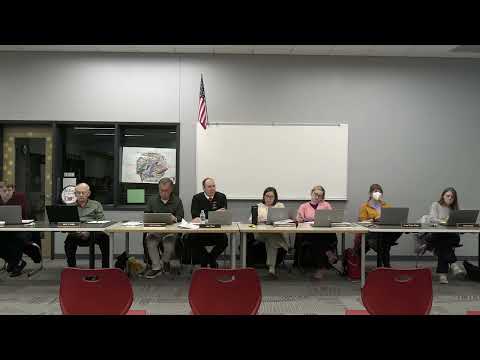
Columbus board weighs use of roughly $1 million left from 2020 capital referendum as five‑year deadline nears
Summary
Board staff told trustees that roughly $1 million set aside for a potential land purchase from the 2020 capital referendum remains unspent and that options include continuing the land search, funding in‑scope building projects, paying down debt, or a hybrid approach; the board asked consultants from PMA to present financial scenarios.
Staff member Jake (last name not provided in the transcript) told the Columbus School District board on March 23 that roughly $1 million set aside by a 2020 capital referendum for a potential land purchase remains largely unspent and that the district is approaching a five‑year benchmark that raises agency penalty risk for unspent referendum proceeds.
The district borrowed $21 million in 2020 and $9 million in 2021 under the referendum. Jake read the referendum text and summarized the originally communicated breakdown: most funds for elementary work, several million for the high school, and $1 million for a future land purchase. He said market and site constraints—floodplain and wetland issues, infrastructure costs, high‑volatility power lines, unwilling sellers and rising per‑acre prices—have made a viable land purchase unlikely in the available budget.
"I can say with more confidence than not that a viable a purchase of land is is not viable," Jake said, adding the district is about 60 days from the five‑year mark tied to the 2021 borrowing and should act before any agency penalties become more likely.
Jake presented five options the district could pursue with the remaining funds: continue seeking land, leave the funds unused (advised against by legal and finance consultants), declare the referendum projects complete and use the remainder to defease debt, spend the funds on capital projects that clearly fall within the referendum scope, or adopt a hybrid of debt paydown and in‑scope projects. He said the district has sought advice from PMA (public financing advisor) and the law firm Boardman Clark.
Several trustees expressed a preference for using the money on capital projects identified in the district's capital improvement plan rather than continuing the land search. Board member John Pearson said the community should be told clearly that land has not been found and what steps the district took to try to identify sites. Trustees noted that using the funds to defease debt would not produce immediate property tax relief and would primarily reduce interest costs over the long term.
The board asked staff to locate documentation about projects that were cut from the original referendum package and agreed to invite PMA to the next meeting to present financial scenarios showing how combinations of debt paydown and in‑scope capital work might affect Fund 46 (the district's capital improvement fund). Jake recommended the board act by the April meeting or, at the latest, the first May workshop to avoid the five‑year deadline.
The board took no final vote on the $1 million at the March 23 meeting and instead directed staff to bring consultant analysis and supporting documentation back to a future meeting.
The district referenced chapter 67 of the Wisconsin statutes in the referendum language read to the board.