Get Full Government Meeting Transcripts, Videos, & Alerts Forever!
Get email alerts on the Budget topic
No spam. Unsubscribe anytime.
Hopatcong board approves 2026–27 budget after superintendent cites $8M state-aid loss and soaring health costs
Summary
The Hopatcong Borough School District board approved the 2026–27 budget after a superintendent presentation that blamed recent S2-driven state-aid reductions and steep health-insurance increases. The budget includes a tax-levy increase and staffing adjustments the district says are needed to balance rising costs.
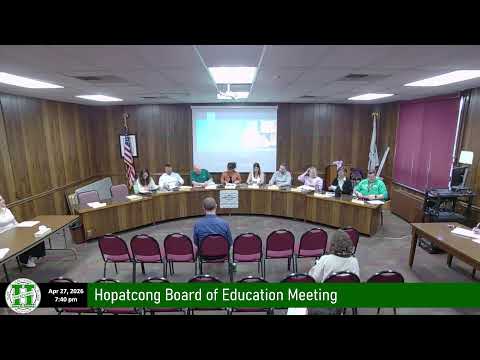
The Hopatcong Borough School District board on Thursday approved the district's 2026–27 budget after a public hearing in which the superintendent described multi-year state-aid losses and sharply rising health-care costs that he said left the district with limited options.
"We've lost $8 million out of $11 million of our state aid due to S2 cuts," the superintendent said during a presentation, adding that those losses occurred over five years rather than the longer phase-in the current funding formula would have allowed. He also told the board health-insurance costs ‘‘went up 31.9%’’ from one year to the next and that premiums are projected to rise again to about $7.2 million in the coming year.
The superintendent identified three primary expenditure drivers: health care, salaries/contractual obligations, and utilities. On the revenue side he cited a modest state-aid increase of $183,000, a 2% tax-levy increase expected to raise roughly $600,000 and a health-care cap exception that the district projects will generate $1.289 million. He said those sources still leave a shortfall that requires cuts and staff reductions.
He detailed district responses already in planning: not replacing one retired administrator (a stated savings of about $95,000), cutting a preschool position, deferring some technology hires and factoring in "breakage" from retirements when calculating replacement costs. He warned that additional classroom cuts would increase class sizes substantially — "If we were to cut one third-grade teacher, our class sizes go to 36," he said — and that more severe secondary cuts could force large high-school classes.
The superintendent framed those choices in the context of state funding rules: he said the state formula limits how much aid a district can lose in a single year and caps gains at 6% for winners, and he referred to earlier changes under "chapter 44" that altered premium calculations for the state health plan.
After public comment and discussion, the board voted to approve the 2026–27 budget. The roll call recorded seven votes in favor and two board members absent.
Board action at the same meeting also approved routine business including March meeting minutes and a package of annual appointments and staffing items for the coming year.
What happens next: the superintendent said the board will continue to look for savings while trying to preserve classroom programs; the board will review related personnel and program adjustments as they are developed. The budget vote closes the district's formal adoption process for 2026–27 at this meeting.
(At the hearing, the superintendent provided the figures and projections quoted above as part of his presentation.)