Get Full Government Meeting Transcripts, Videos, & Alerts Forever!
Get email alerts on the Economic Development topic
No spam. Unsubscribe anytime.
Bountiful council debates measurable public return vs. targeted business benefit in economic-development criteria
Summary
At a May 26 work session, the council reviewed an updated economic-development purpose statement and guiding principles and debated whether criteria should prioritize measurable city-wide returns or targeted, high-impact business attraction; staff will circulate a second rank-order survey and a sales-tax revenue briefing.
Bountiful City Council members on May 26 reviewed a revised economic-development purpose statement and guiding principles and wrestled with how to weigh measurable public return against targeted business benefits when selecting strategies.
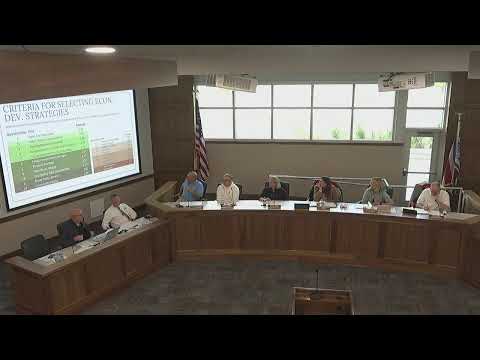
Gary Hill, who led the presentation, said the updated purpose emphasizes "ongoing economic development and the importance of economic development to reduce or not unnecessarily increase the local tax burden," and urged the council to pick a short list of criteria to evaluate potential approaches. "If everything's a priority, nothing is," Hill said, arguing the city needs a clear way to gauge which strategies will best meet council goals.
Council discussion focused on two closely related survey items. Question 20 asked whether a proposed strategy "produces measurable city benefit relative to public spending," while Question 6 asked whether a strategy benefits a broad population versus a small group. Several members said Question 20 functions as an "umbrella" that emphasizes measurability, while Question 6 captures who benefits even when outcomes are harder to quantify. Council member Dan framed the distinction by noting some single-business recruitment efforts can be highly measurable and materially impactful even if they favor a specific area.
Members used Main Street and sales-tax generation as test cases: some argued investments that strengthen downtown vitality produce intangible benefits for the whole city, while others said the council should be able to point to metrics when public dollars are used. The mayor agreed the draft captured earlier input and said she had made a note to refine wording.
Rather than settle final language at the session, council members asked staff to do two follow-ups: circulate a second survey that forces a rank-order among the top criteria and present a briefing on the city's current sales-tax revenue sources (including the general plan's sales-tax leakage study) so members can see which sectors drive revenue. Hill said the additional ranking will help the council prioritize among the green/high-scoring items identified in the first survey.
The council did not take a formal vote on policies or allocations during the work session; members directed staff to refine the wording of the criteria, send the revised survey, and prepare the revenue analysis for a future meeting.
The work-session discussion is expected to inform a future ordinance or strategic plan update once staff returns with the second survey results and the requested revenue briefing.