Get Full Government Meeting Transcripts, Videos, & Alerts Forever!
Get email alerts on the Finance Bond topic
No spam. Unsubscribe anytime.
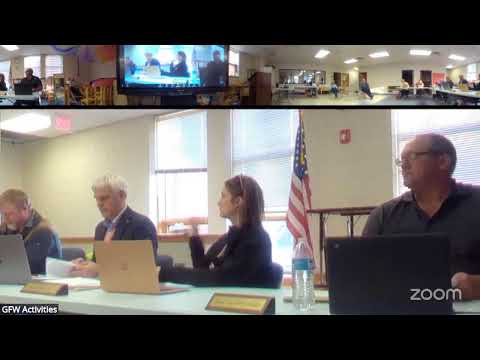
Dr. Smith recommends abatement bond to pay city sewer assessment, board schedules hearings
Summary
GFW Public Schools administration proposed using an abatement bond to pay roughly $1.6 million in city water/sewer assessments tied to the new school, freeing about $130,000 a year for the general fund but triggering a tax increase; board set May meetings to consider the bond and related budget reductions.
Dr. Smith recommended the district pursue an abatement bond to pay off a city of Gibbon special assessment for water and sewer tied to the new school site, saying the action would free roughly $130,000 a year from the general fund over the next 20 years while triggering a modest property tax increase.
The recommendation, presented during a review of proposed 2025–26 budget reductions, explained that an abatement bond is a financing tool the board can authorize without a public vote and that state school building aid would cover about 52–53% of the eligible costs. Administration estimated the amount needed to repay the special assessment at about $1.6 million and said the district would apply bond proceeds to the city assessment directly rather than have the district pay the assessment over 20 years out of the general fund.
Why it matters: The bond would reduce ongoing general‑fund pressure by retiring the district’s portion of the assessment up front, but it carries the consequence of increasing property taxes in the near term. Dr. Smith told the board the district’s financial adviser provided illustrative tax impacts and recommended a 10‑year amortization to limit the annual levy effect.
Key details and next steps: Administration said the district would call a public hearing as part of the bond process. The board agreed to hold a special meeting on May 5 to adopt a preliminary resolution to move forward with abatement bonds and then to hold the required public hearing at its regular May meeting. Administration described a timeline in which a parameters resolution would allow the sale (estimated around June 4), the board would ratify the sale (mid‑June), and the bonds would close at the end of June, with project proceeds then available to retire the assessment.
Staff stressed the need for clarity at public hearings. Dr. Smith said bond counsel and a tax specialist reviewed the proposal and that the district is finalizing the exact payoff amount (administration used a conservative $1.75 million estimate for planning and public‑example calculations). He also said the district would prepare examples showing residential and non‑homestead impacts for the public hearing and post the data on the district website.
What remains unresolved: The board did not vote on the bond at the meeting. Administration will return with final numbers, the parameters resolution language, and the public‑hearing schedule. The district also plans to present the recommended personnel and program reductions that underpin the proposed 2025–26 budget at the May review meeting.