Get Full Government Meeting Transcripts, Videos, & Alerts Forever!
Get email alerts on the Wawarsing Estates Zoning topic
No spam. Unsubscribe anytime.
Public hearing on Wawarsing Estates local law spotlights developer request to market 55+ units to general public after 60 days
Summary
At a town board public hearing, the developer and planning board clashed over a proposed local law allowing the Wawarsing Estates 55+ project to be marketed to the general public after a 60-day vacancy period; planning board chair raised safety and incomplete environmental review concerns and asked the hearing remain open.
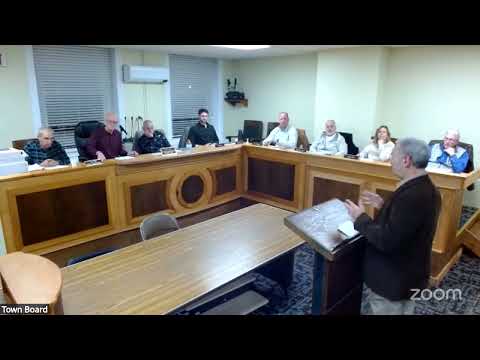
The Town Board of Wawarsing opened a public hearing on a proposed 2025 local law that would affect the Wawarsing Estates housing project, originally approved as a 182-unit, age-restricted (55+) development. The developer’s representative told the board the measure would allow marketing to the general public after a set marketing window to avoid prolonged vacancies.
The developer’s representative argued the project required flexibility because “they put a significant amount of money into the ground” and, under the proposed text, “at some certain point, I believe it's 60 days under the proposed legislation, they would be able then market it to the general public,” the representative said, explaining that limitation of occupancy to 55+ had become commercially difficult to sustain. The representative said the planning board previously recognized a vested right to continue the project and asked the board to consider the local law favorably so the project could move forward.
John Smalls, identified in the record as the planning board chairman, said the planning board’s letter recommended the applicant return to the planning board to seek a revision to the site-plan/special-use approval rather than rely only on the proposed local law. Smalls raised specific safety and programmatic concerns, saying conversion from a 55+ facility to open occupancy introduces different public-safety needs: the site’s layout abuts a creek, offers limited green space for children, and provides amenities—pool and tennis courts—whose location and access may be incompatible with family occupancy. Smalls also said that the Environmental Assessment Form (EAF) provided “was not completely filled out,” making it difficult to assess environmental impacts and urged the hearing remain open so missing information could be developed and reviewed.
Board members and counsel discussed procedure. One board speaker noted the board needed to act first on a separate agenda item (item 19 in the record) before approving the local law and suggested the new provision be inserted as a narrowly targeted, site-specific amendment (the discussion referenced code numbering such as 112-31 and a possible new placement at 112-80). Counsel/board members emphasized the proposal as written in the record was intended as a one-time, site-specific accommodation for projects previously proposed rather than a blanket change for all 55+ developments.
The board did not adopt the local law at the hearing. Planning board concerns about safety and the incomplete EAF were left on the record; the hearing record includes requests that the applicant complete environmental documentation and, if required, return to the planning board for a site-plan revision. Board members also recorded that agenda item 19 would need resolution action before final local law consideration.
What happens next: The record shows the public hearing remained active for additional input and further procedural steps (completion of the EAF, any required planning-board review and a separate vote on agenda item 19). The board did not finalize a local law during the session.