Get Full Government Meeting Transcripts, Videos, & Alerts Forever!
Get email alerts on the Budget topic
No spam. Unsubscribe anytime.
Lebanon Community SD 9 proposes $99.4 million budget with $2 million in cuts amid enrollment and cost pressures
Summary
Superintendent Jennifer Meckley presented a proposed $99.4 million 2026–27 budget for Lebanon Community SD 9 that closes a roughly $2 million gap through targeted reductions, one-time use of reserves and potential staffing changes; rising unemployment-claim costs tied to Senate Bill 489, higher insurance and PERS liabilities were cited as key drivers.
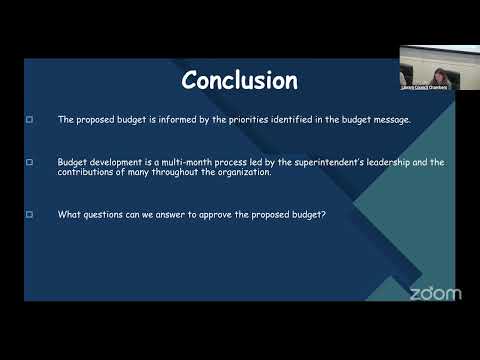
Superintendent Jennifer Meckley presented the proposed 2026–27 budget for Lebanon Community SD 9, saying the $99,400,000 plan reflects the district’s priorities while responding to declining enrollment and rising costs. She told the budget committee the proposal includes about $2,000,000 in reductions, while aiming to keep cuts away from classrooms when possible.
Meckley said the district’s priorities—high-quality instruction, student safety and belonging, financial integrity, effective facilities and stronger community connections—guided decision-making. She highlighted district “bright spots,” including gains in early literacy, a graduation rate just under 90% for the class of 2025 and substantial participation in career and technical education.
Steven, the district presenter, reviewed the committee’s statutory role and walked members through the financial drivers behind the proposal. He said building enrollment declined from about 3,872 on Oct. 1 to roughly 3,773 (including 101 online students), a change that translates to an estimated revenue reduction that aligns with the $2.3 million impact cited in the presentation. He noted statewide growth in virtual schools contributes to local enrollment pressure.
Rising costs were a central rationale for the reductions. Meckley and staff cited three principal pressures: unemployment-claim expenses—attributed in part to Oregon Senate Bill 489 (2023), which expanded certain eligibility for laid-off classified staff during breaks—property and liability insurance premiums (nearly doubling in recent years), and an increased PERS liability that Meckley said has grown by about $2,650,000 since 2023 to an estimated $11,000,000 for 2026–27.
To limit the immediate impact on programs, the proposed budget relies on one-time beginning fund balance of roughly $3,120,000 and projects an ending fund balance of about $4,880,000 (approximately 7.49% of the general fund), within the commonly recommended 5–8% range. The presentation also identified targeted reductions and reallocations: reduced capital projects funding, a $0 bus replacement fund (with existing bus lease payments moved into the general fund), and modest cuts or transfers in nutrition services and other departments.
Meckley said the board had authorized potential reductions in force in alignment with the collective bargaining agreement and that planned staffing adjustments include approximately 4.2 certified positions (with a possible fifth) and about 12 classified positions, with an emphasis on using attrition where feasible. She added that some district-office roles—specifically the chief operations officer and the director of communications—were included for elimination in the current proposed budget.
The budget document also reflects reduced federal Title funding (presenters estimated about $115,000 less in combined Title I–IV grants, or roughly a 5.6% decline), and the district signaled it may move some grant-funded staff costs into the general fund to maintain services where possible.
Committee members asked for clarifications on multiple lines—including preschool promise–funded pre-K classrooms, increases in student-safety FTE, professional-development travel totals, and technology staffing changes—and staff confirmed several corrections and reclassifications (for example, shifting about $32,000 for science kits to the proper function line in the document).
The budget discussion remains active: presenters requested committee direction on several trade-offs, and members scheduled a follow-up meeting next Thursday to continue deliberations. Steven asked members to submit outstanding questions by email before that session.
What happens next: the budget committee will reconvene to review remaining questions and direction; any changes the committee recommends will be taken to the full school board for adoption and property tax rate setting later in the process.