Get Full Government Meeting Transcripts, Videos, & Alerts Forever!
Get email alerts on the Underground Utilities topic
No spam. Unsubscribe anytime.
Planning commission defers vote on broad underground‑utilities requirement
Summary
City planners presented a text amendment to require utilities be placed underground for any development that creates new streets. Commissioners asked for clarifications on alleys, retrofit rules and cost impacts and deferred the item to June 25 for additional staff follow‑up.
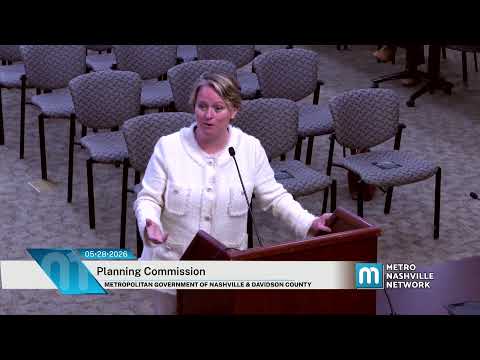
Planner Dustin told the Metropolitan Planning Commission on May 28 that staff is proposing to remove the word “residential” from the city code so that the requirement to place utilities underground would apply to any development that proposes a new street. “This text change would amend the code to require underground utilities for all development that proposes new streets,” Dustin said.
Commissioners probed the scope of the change and its likely costs. Commissioner Leslie asked whether alleys that act like streets would be covered; Dustin said the code currently treats alleys differently and staff would check DOT’s classification and return with a recommendation. A council member raised the potential cost passed to tenants or customers and asked for a comparative cost estimate; Dustin said staff does not yet have a cost breakdown but would research it.
Commissioners also discussed the difference between installing utilities during new construction and retrofitting existing above‑ground utilities after storms. Lisa, planning staff, said undergrounding at the time of new construction is generally less costly than retrofits: “when you already have things dug out and you’re putting in stormwater, you’re putting in water and sewer, then there’s not a ton of cost inferential to underground the lines.”
After discussion, Commissioner Leslie moved to defer the item to the June 25 Planning Commission meeting so staff can clarify alley treatment, provide cost information, and refine implementation language. The motion passed by voice vote. Staff noted the council public hearing is scheduled for July 7.
The commission’s deferral means staff will return with the clarified language, implementation details and any cost analysis requested by commissioners before the body forwards a recommendation to Metro Council.