Get Full Government Meeting Transcripts, Videos, & Alerts Forever!
Get email alerts on the Code Enforcement topic
No spam. Unsubscribe anytime.
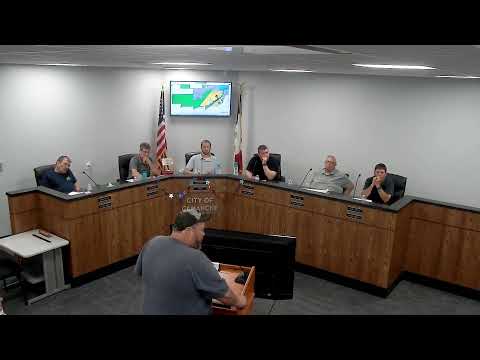
Comanche council directs staff to draft tighter junk-vehicle rules after repeated resident complaints
Summary
Council directed staff to draft proposed amendments to the city's junk-vehicle ordinance to clarify the definition and close exceptions for business inventory; staff recommended a grace period for businesses and outlined enforcement issues and zoning exemptions.
Council members voted to direct staff to draft proposed amendments to the city’s junk-vehicle ordinance after extended discussion about resident complaints and the limits of the current ordinance.
A council member (Speaker 2) summarized the problem: residents have repeatedly complained about visible vehicles that many consider "junk," but the current code and state definitions focus on "abandoned" rather than "junk" vehicles. The police/ordinance staff (Speaker 16) described field inspections of sample properties and found only two or three vehicles that met the current municipal definition; staff also cited contradictions between the junk-vehicle ordinance and zoning protections for businesses that may allow vehicles on properly zoned lots if they are screened by fences.
Council debated whether to change the exemption that allows vehicles on business premises and whether to require better screening or to strengthen the definition (for example, any vehicle not operable under its own power or missing inflated tires). Council members asked for a balanced approach: stronger definitions and enforcement, but a grace period for businesses and property owners to comply.
The council unanimously (by roll call) directed staff to prepare proposed amendments and to review related sections such as the screening/fence requirements in Chapter 18, with the intent of returning proposed ordinance language and an anticipated schedule for readings.
Why it matters: Residents have voiced this as a recurring community concern in surveys and prior planning processes; clarifying the legal definitions and exceptions will determine which visible vehicles can be lawfully required to be hidden, repaired, or removed.
Next steps: Staff and the chief will prepare a draft ordinance package, review exemptions (including Section 3-10-12.2 and Chapter 18 fence-screen provisions), and present a draft for council review at a future meeting prior to readings and public comment.