Get Full Government Meeting Transcripts, Videos, & Alerts Forever!
Get email alerts on the River Restoration topic
No spam. Unsubscribe anytime.
Mashpee select board backs independent review to guide Mill Pond river restoration
Summary
After extended public and board debate, the Mashpee Select Board voted unanimously to pursue an independent hydrogeology/fluvial‑geomorphology consultant to evaluate plans to restore river passage at Mill Pond and advise whether the project would be a ‘restoration’ or a new channel alignment.
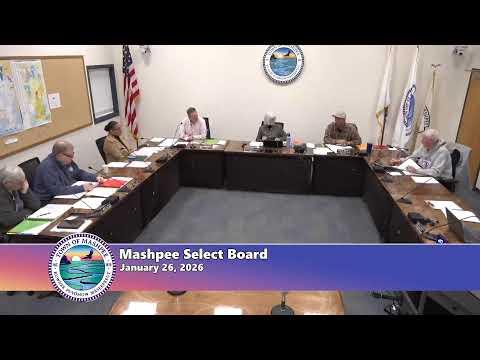
The Mashpee Select Board voted unanimously on Jan. 12 to seek an independent consultant with expertise in hydrogeology or fluvial geomorphology to advise the town on a proposed river‑restoration project at Mill Pond. The decision follows lengthy discussion about subsurface work, historical evidence and community concerns about whether the plan would restore an historic channel or create a new waterway.
The recommendation, drawn from a memorandum by the town’s Environmental Oversight Committee (dated Dec. 15, 2025), was prompted by an NRCS‑funded design intended “to improve fish passage in the Mashpee River for river herring, brook trout and other diadromous fish,” said Catherine Laurent, Mashpee’s director of public works. Laurent told the board that 30%‑level design probes of the impoundment found a uniformly sandy profile and that the current alignment follows a 1992 channel previously approved and dredged by the conservation commission and DEP.
Board members and residents pressed for more independent expertise. One select board member who also identified as a tribal member said, “I personally I’m pro dam removal,” and urged that any work be grounded in both technical data and community history. Other members and commenters asked whether probes were sufficient or whether controlled borings and a fluvial geomorphologist would better identify any historic channel, sedimentation patterns and likely fish‑passage benefits.
Town staff and board members emphasized that the inquiry is intended to distinguish two separate objectives: confirming whether the proposal is truly a restoration (returning water to an historic location) or a relocation (creating a new channel), and ensuring the project will provide the intended cold‑water and shading conditions that benefit native fish. The board asked the town manager to develop a clear scope of work for the consultant — including whether borings, historic topo review, sediment analysis and abutter outreach are needed — and to investigate potential funding sources (grant vs. project funds).
The motion the board approved was to support the EOC recommendation that the town consider engaging “an independent consultant with demonstrated expertise in hydrogeology or fluvial geomorphology, ideally with experience in neighboring Cape Cod communities.” The motion passed on a roll call with all members voting in the affirmative.
Next steps: staff will return with a recommended scope and funding plan for soliciting the consultant, and the board asked for the consultant’s findings to be shared with the public and tribal stakeholders as part of continued outreach.