Get Full Government Meeting Transcripts, Videos, & Alerts Forever!
Get email alerts on the Animal Control topic
No spam. Unsubscribe anytime.
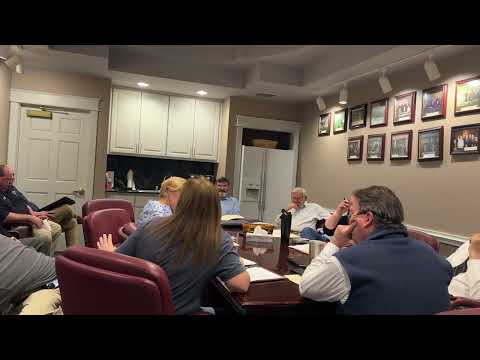
Program presenter outlines spay-neuter voucher rollout, cites online and postal problems
Summary
A presenter told the council the countywide spay/neuter voucher program sold 30 vouchers, is facing online-application and postal-delivery problems, and has added additional veterinary partners and outreach steps; no new funding request was made at the meeting.
A program presenter updated the council on a countywide spay/neuter voucher program, saying the initiative has sold 30 vouchers and that the associated funds are held in a restricted account until vouchers are redeemed. "We have sold the 30 vouchers," the presenter said, noting that two extra names appeared on her list when it was submitted.
The presenter described technical problems with the program's online application, which initially prevented people from completing submissions. She also said postal delivery has been unreliable in some cases, and that she has begun handing vouchers directly to the Albertville post office window to keep distribution local after some envelopes were marked undeliverable. "Since I've been doing that, I've not had any that didn't get delivered," she said.
Explaining the program rationale, the presenter outlined conservative reproduction assumptions to quantify impact and argued that one spay/neuter voucher can prevent a substantial number of future puppies. "One spay-neuter voucher can prevent the birth of 366 puppies," she said while describing her modeling assumptions (litters per year, survival rates and attrition by vehicle strikes and disease).
She said the program has broadened its provider list, noting "we've now added Dr. Adams" and that participating clinics include providers that serve Albertville and nearby towns; she cautioned that some clinics book four to six weeks out, which creates timing pressure if a dog may already be pregnant. The presenter said materials and the application are not yet available in Spanish but that Haitian Creole support is planned and that she will complete kinks in English first.
The presenter described additional services offered through the program, including emergency veterinary care (with clients repaying the program in agreed cases), microchipping, vaccinations for litters to reduce cost barriers, and a lost-and-found intake form to support a Facebook page run by board member Andrea Barcliff. She also said she has met Tommy Rainwater, an additional animal control officer, who agreed the presenter could email reports for entry into the county's system.
No formal request for additional funding was made at the meeting; the presenter said outstanding questions from the mayor's office remain and that she would return with answers if requested. She provided sample vouchers and a printed explanation of how the program works and offered to share the application process via a QR code (she cautioned that application submissions would not process until the online payment/processing issue is resolved).
The council did not take action on additional funding during the session; follow-up was left as a staff/mayor's-office item.