Get Full Government Meeting Transcripts, Videos, & Alerts Forever!
Get email alerts on the Governance topic
No spam. Unsubscribe anytime.
Wake County Board sends several policy revisions back to policy committee, advances technical correction to first reading
Summary
The board reviewed multiple draft board policies; it voted to advance a technical citation correction in BP 26‑70 to first reading, rescinded an older superintendent authorization policy from the old manual (BP 21‑55), and directed several other policies (board‑superintendent relations, ethics training, consent‑agenda rules) to the policy committee for language refinement.
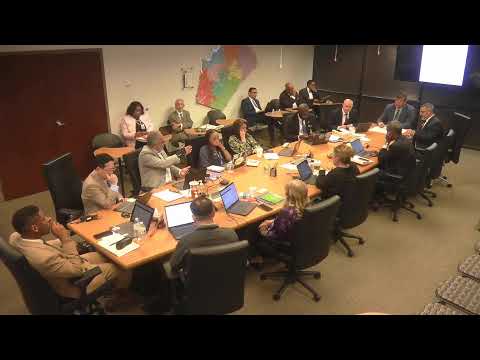
At its work session the Wake County Board of Education reviewed a suite of proposed board policy revisions and took a mix of procedural votes and referrals to the policy committee.
Dr. Atkins presented the packet and said staff brought the items for initial review so the policy committee can refine language before placement on future consent agendas. On BP 26‑70 (business advisory council statutory citation), staff described the change as a technical correction to align the policy with North Carolina General Statute 115C‑172 and said it did not alter intent. A motion to advance BP 26‑70 to first reading was called and carried by voice vote.
On BP 21‑55 (authorization of the superintendent to act for the board), the board attorney recommended rescinding the old policy rather than migrating it into the new manual; the board agreed and rescinded the older manual’s version.
The board engaged in extended discussion of BP 20‑10 (board‑superintendent relations) and a proposed paragraph that would require the superintendent to notify the board when asked to comment on proposed or pending state legislation or policy. One board member called the language overly broad and “nanny‑like,” noting that the superintendent is contacted frequently by legislators, media and panels; others asked for narrower language that would trigger notice only when matters were relevant to board decision‑making. Legal counsel said the board could impose a higher internal standard but that any change should be carefully tailored. The board agreed to send BP 20‑10 to the policy committee for refinement.
Members also debated proposed changes to meeting‑agenda procedures and the consent agenda (BP 23‑30). Key points included whether a single member should be able to move items off consent automatically, and whether the proposed noon‑Monday notice deadline allowed enough time for review by board members and the public. Several members asked staff to work with the policy committee to find compromise language balancing staff preparation time and board members’ ability to raise timely concerns.
The board likewise discussed strengthening ethics training requirements (BP 21‑20) to require more frequent training than state statute requires; counsel said the board could adopt a higher internal standard, and the item was sent to policy committee for drafting.
What’s next: staff will forward revised language to the policy committee for specific drafting; the technical correction to BP 26‑70 will appear as a first‑reading item on the board agenda.