Get Full Government Meeting Transcripts, Videos, & Alerts Forever!
Get email alerts on the Zoning And Land Use topic
No spam. Unsubscribe anytime.
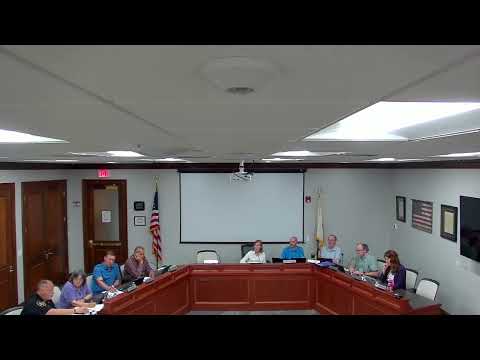
Campton Hills trustees direct staff to draft short moratorium on large farm accessory structures
Summary
Trustees asked staff and the law firm to prepare a 90–100 day moratorium ordinance limited to farm (F) zoning for accessory structures over 600 sq ft to allow the Planning & Zoning Commission and staff time to study whether the ordinance needs to tighten rules that have allowed non‑agricultural contractor yards on farm parcels.
The board discussed a proposed temporary moratorium on accessory structures over 600 square feet in area in the village’s farm (F) zoning district and gave staff direction to prepare an ordinance. A staff presenter explained the intent is a short (90–100 day) pause limited to F zoning to allow the Planning & Zoning Commission and staff to study whether changes are needed to prevent commercial contractor yards and other non-farm uses from locating on farm parcels that are technically compliant under current rules.
Trustees described examples of properties where outbuildings appear to support contractor-storage rather than agricultural activity and said that, while some owners technically retain a minimal agricultural use (e.g., a small crop) that status complicates enforcement. One trustee said the moratorium is designed to avoid repeated adjudications and lawsuits and to give staff and the planning commission time to draft tightened ordinance language or clearer variance standards.
Administrator/Planner staff told the board they would work with the village law firm and the Planning & Zoning Commission to prepare an ordinance for the next regular meeting; staff expects the PZC to discuss the issue at their next meeting and to return a recommendation prior to the moratorium’s expiration. The staff summary emphasized that a moratorium would be a temporary measure to permit careful study and would not necessarily result in permanent zoning changes.
Trustees were clear that property-rights concerns require using an ordinance (not an informal policy), and several asked that the ordinance address targeted concerns — for example, accessory buildings used as contractor yards on 10–50 acre parcels where the buyer’s intent is not agricultural production. The board directed staff to prepare the moratorium ordinance for formal consideration at the next meeting.