Get Full Government Meeting Transcripts, Videos, & Alerts Forever!
Get email alerts on the Doe Operations And Regulation topic
No spam. Unsubscribe anytime.
DOE updates: proposed ECSE add‑on endorsement, stock‑epinephrine fast‑track paused, training and licensing‑system plans
Summary
DOE updated the council on several administrative and regulatory items: a proposed add‑on endorsement in early childhood special education moving through work‑group and board processes; withdrawal of a fast‑track stock‑epinephrine regulation after public comment and a shift to a full NORA process; new preservice training modules due May 1; and procurement progress for a licensing‑system replacement.
The Department of Education briefed the council on a set of operational and regulatory initiatives affecting early‑childhood programs.
Early childhood special education endorsement: Dawn Peters, DOE early‑childhood special education coordinator, described plans to create an add‑on endorsement to ease pathways for teachers (for example those with PK–3, PK–6 or general special‑education endorsements) to gain an ECSE add‑on without completing the prior 27‑semester‑hour requirement. Peters said a stakeholder work group will convene in May, with the department aiming to complete recommendations over the summer and seek advisory and board approvals thereafter. The change is intended to address a critical shortage of ECSE teachers and support inclusive classroom staffing.
Stock epinephrine regulatory process paused: DOE staff reported the fast‑track regulatory package requiring stock, undesignated epinephrine in centers drew substantial public comment (about 135 comments recorded across CDC‑related regulatory work and specific objections to the fast track), citing training, liability and costs. The department will withdraw the fast‑track request at the upcoming April board meeting and pursue the standard three‑phase notice‑of‑intended‑regulatory‑action (NORA) process to gather broader input and refine proposals. Staff said concerns raised included potential insurance coverage gaps and the cost of maintaining undedicated stock epinephrine.
Preservice training and CLASS/VA Connects updates: DOE announced a revised preservice training rollout: new, shorter, content‑specific modules (center‑based birth‑to‑5, home‑based, school‑age) will be available May 1; core competencies and school‑age modules are already live. DOE also reiterated planned enhancements to VA Connects to improve performance, navigation and data downloads. The department said it will move to VA Connects IDs consistently and keep crosswalks for legacy IDs.
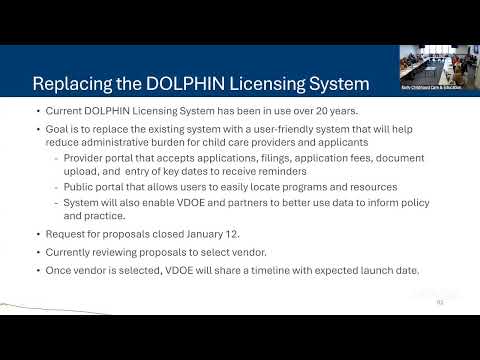
Licensing‑system replacement procurement: DOE staff said IT and business teams will review vendor proposals and demonstrations in mid‑April and enter vendor negotiations; the new system aims to reduce administrative burden for providers by allowing document uploads, expiration reminders and improved dashboard searches to avoid repeated reentry of the same information on renewals.
Why it matters: The add‑on ECSE endorsement is a targeted licensure change to address workforce shortages; withdrawing the fast‑track epinephrine regulation signals DOE’s intent to widen stakeholder input on a costly and sensitive health measure; the training and technology updates are operational moves intended to reduce provider burden and improve data quality.