Get Full Government Meeting Transcripts, Videos, & Alerts Forever!
Get email alerts on the Land Use topic
No spam. Unsubscribe anytime.
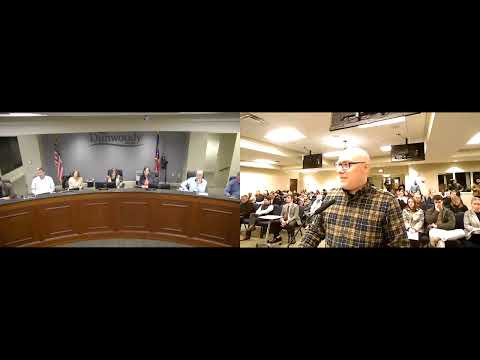
Dunwoody council takes public testimony on proposed Raising Cane’s drive‑through after staff recommends denial
Summary
At a public hearing on Nov. 10, Dunwoody officials heard hours of testimony about a Raising Cane’s proposal for a drive‑through at 125 River Center West; staff and the planning commission recommended denial citing safety and access‑management concerns, while the applicant presented updated traffic modeling and mitigation plans. Council did not vote and will revisit the case at the Dec. 1 meeting.
The Dunwoody City Council on Nov. 10 heard extensive testimony and technical presentations on a special land use permit request from Raising Cane’s to re‑establish a drive‑through at a former Wells Fargo property on Ashford Dunwoody Road.
Staff and the planning commission urged the council to deny the drive‑through component. Paul, the city planner, told the council staff “overall recommends denial of this request” and highlighted that the existing curb cut is too close to the adjacent McDonald’s access (85 feet vs. a 245‑foot standard) and that adding another drive‑through could undermine the corridor’s planned streetscape and multiuse path.
The applicant’s team — represented by attorney Harold Buckley and traffic engineers including Allison Labor — presented an updated traffic impact and stacking analysis they said addressed city concerns. Allison Labor said the team revised trip estimates downward from an earlier 1,100 daily trips to about 964 and showed simulation samples of peak‑lunch queuing that the applicant says can be managed onsite. She described use of both the Institute of Transportation Engineers methodology and Raising Cane’s local operations data in the analysis.
Raising Cane’s representatives also committed to closing the median cut at the site’s Ashford Dunwoody driveway to create right‑in/right‑out access, to incorporate a raised speed table at the driveway, and to coordinate with public works on the multiuse path design. The applicant offered to contribute toward the path construction (presented in the meeting as roughly $150,000) and outlined grand‑opening traffic plans — hiring off‑duty officers, using temporary cones and signs, and deploying mobile order‑taking to reduce queue lengths.
Opponents and nearby property owners pushed back on safety and circulation risks. Matt Munoz, general manager of the nearby LaMeridien (the Meridian), said the proposed drive‑through would funnel customers through a circular hotel arrival area and could increase congestion for hotel guests and staff, noting the hotel employs about 103 people. Resident speakers urged council to consider higher‑value or longer‑term uses for the parcel rather than another drive‑through in the city’s primary commercial corridor.
Council members focused technical questions on queuing capacity, how the applicant’s on‑site operating procedures would prevent spillover into adjacent parking and cross‑access drives, and whether the applicant’s models reflect a realistic grand‑opening period. Allison Labor and Raising Cane’s operations staff said their site visits (including one to a Buford store) and conservative modeling account for peak demand, and the company described operational steps it takes to expedite service.
The council did not take a vote on the SLUP at the Nov. 10 meeting. Staff reminded the body that Georgia law requires a specific zoning process; Paul said the case will return for further consideration at the council’s Dec. 1 meeting. The planning commission had recommended denial at its September hearing by unanimous vote.
What’s next: The council will consider formal action on the drive‑through at its Dec. 1 meeting, after additional materials and any follow‑up analysis are provided to council members and staff.