Get Full Government Meeting Transcripts, Videos, & Alerts Forever!
Get email alerts on the Budget And Finance topic
No spam. Unsubscribe anytime.
West Goshen residents press board to revise reserve policy; supervisors defend one-time revenues and stormwater plan
Summary
Residents urged the board to lower its reserve or return funds after the township's general fund rose to about $20 million; board members said much of that gain came from one-time sources (ARPA, major property sales and transfer taxes) and stressed the money is earmarked for stormwater and other infrastructure needs.
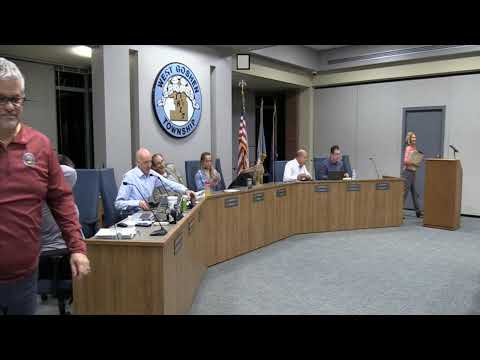
A public push for a tax rebate and a change to West Goshen Township's fund-balance policy turned into an extended debate at the Board of Supervisors' Nov. 7 meeting.
"As far as the residents know ... the fund balance policy recommends a 20% general fund balance of total annual expenditures," said Margie Stewart of the West Goshen Budget Watchdog Group, reading from a written request and urging the board to "review the township's reserve fund strategy and consider a tax refund." Stewart said, by her calculation, a 20% minimum equates to roughly $4,000,000 and asked whether the board would amend the policy if it preferred a higher or lower target.
Board members and staff responded that the policy is a minimum, not a cap, and that the recent growth in the general fund is largely the product of nonrecurring revenues. "Most of this increase ... occurred in the last two or three years," said Supervisor Sean Walsh, describing about $7.5 million of the rise as recent and attributing it to American Rescue Plan Act funds, transfer taxes tied to large commercial property sales and higher interest income. "These are one‑off revenues ... accounting staff guidelines state that accumulation of additional funds as a result of non‑recurring revenue sources should be prohibited for being used for ongoing expenditures," Walsh said, arguing that retaining the funds for capital needs is prudent.
Finance Director Christine (first name provided in public remarks) told the board it is required to have a fund-balance policy and that the existing document (adopted in 2012) is a best-practice guideline the township follows for risk management. She and other board members urged clearer public communication about the township's capital plan and how the reserves would be spent.
Resident and frequent commenter Mr. Goldman pushed for a more aggressive response, saying the township now appears to hold roughly $20 million and asking for a 2024 tax rebate. "I am asking for a 2024 tax rebate to the people who have paid into this township," he said, adding that, if the board intends to keep a significant balance, the public should see an explicit schedule for the township's $45 million stormwater and remediation estimate.
Supervisors pointed to an existing 10‑year capital plan and to emergency needs such as failing corrugated pipes in neighborhoods. "We have 30,000 feet of corrugated metal pipe in the ground that was not even included in this usual form of study ... it was an immediate concern," one board member said, noting prior emergency work that cost roughly $900,000. Board members said they expect to use a mix of grants, ARPA funding and targeted transfers from the general fund to the capital reserve as projects arise, not to spend the entire balance at once.
The board did not take any action to change the policy at the meeting; several members said the policy could be revisited during the next scheduled financial policy review and that staff will continue to publish project information and outreach materials in more plain language so residents can better understand the timeline and tradeoffs.