Get Full Government Meeting Transcripts, Videos, & Alerts Forever!
Get email alerts on the Dam Safety topic
No spam. Unsubscribe anytime.
DEEP orders drawdown at Killingly Pond Dam, issues notice of violation
Summary
Connecticut DEEP said sediment movement through Killingly Pond Dam prompted an emergency authorization to lower the impoundment and a notice of violation; the owner, Wish, must submit an H&H analysis in 30 days and a repair plan in 60 days while residents press for clarity and oversight.
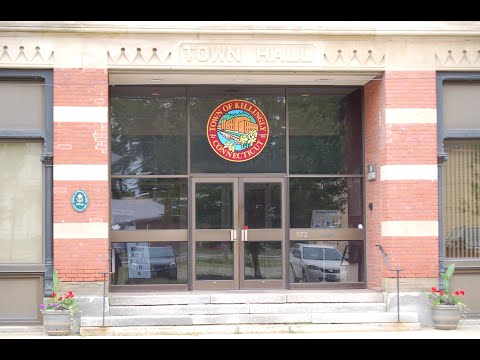
Connecticut Department of Energy and Environmental Protection officials told residents at a Killingly Town Hall meeting that sediment movement through Killingly Pond Dam prompted an emergency authorization to draw down the pond and a notice of violation requiring rapid follow-up studies.
"We observed sediment moving through the dam," said Chuck Lee, assistant director of DEEP's dam safety programs. "When that happens, that becomes a concern ... their engineer ... said the dam should be lowered to take pressure off the dam. The engineers in my office said we agree with that recommendation." Lee said the pond is regulated by the state, not the federal government, and that DEEP issued an authorization and an NOV to manage the response.
DEEP officials said the NOV requires the dam owner, a company identified in the meeting as Wish, to provide a hydraulic and hydrologic (H&H) analysis of the low-level outlet within 30 days and a repair plan within 60 days. "We need to see the H and H analysis in 30 days, and we need to see a plan to repair in 60 days," Lee said.
Brian Golombieski, a supervisor in DEEP's land and water resources enforcement section, said follow-up enforcement activities are underway "to get it into a safe condition." He added that DEEP considers Wish to be responsive and has had professional engineers working with the owner, but the agency must ensure the outlet can pass a 1% (100-year) storm without backing up to the dam.
DEEP characterized the intervention as an administrative and safety response, not a finding of negligence. "That notice of violation isn't for really a violation," Lee said. "It's a response to the drawdown ... so they could respond to the situation." He told residents the emergency authorization remains in effect "until the commission determines that a safety condition no longer exists."
Lee described the condition that triggered the authorization: long-term seepage that recently began transporting sediment, a signal DEEP interprets as possible internal erosion. "Seepage is one thing ... but when sediment is moving through the dam, that's telling us there's probably internal erosion going on and the potential for that dam to start structurally being compromised," he said.
DEEP noted additional complicating factors at the site: the dam is old and its crest is used for property access and as a roadway for some property owners, which raises concerns about emergency access if major repairs or a breach were required. Lee said breach is one legal option to make a dam safe, but it triggers separate permitting and environmental review.
Any plan to remove or substantially alter the impoundment would require state and likely federal permits. DEEP and meeting participants cited the Army Corps of Engineers' role under federal permitting programs for major changes to waterways.
Next steps: DEEP said it will receive and review the H&H analysis from Wish within 30 days, expect a repair plan in 60 days, and will coordinate public updates. "We're available. If you have questions, we'll try to make information available as quickly as we can," Lee said.
Provenance: DEEP's description of sediment transport and the emergency authorization was presented by Chuck Lee during the DEEP presentation (SEG 044–SEG 156); the 30-day H&H and 60-day repair-plan deadlines were stated later in Q&A (SEG 490–SEG 505).