Get Full Government Meeting Transcripts, Videos, & Alerts Forever!
Get email alerts on the Land Use topic
No spam. Unsubscribe anytime.
Developer proposes phased conversion of former Shelley resort into family-style multi‑bedroom units; board flags sewer, water and stormwater issues
Summary
An applicant proposed a three‑phase conversion of the former Shelley resort into small family‑style units; planning staff warned municipal sewer and water district boundaries and cumulative infrastructure impacts must be resolved before approving Phase 1.
An applicant presented plans to convert and expand the existing Shelley resort into a series of smaller, family‑style units in a three‑phase redevelopment.
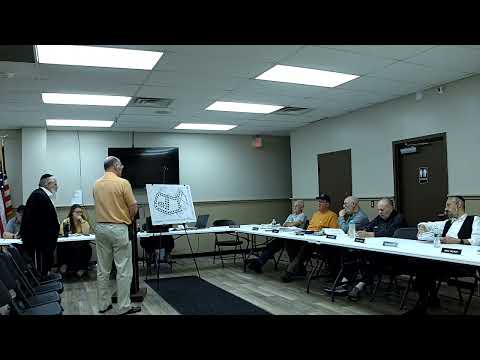
Engineer Chris Dasey of Brooks Engineering said the concept would create a mix of buildings — some with eight bedrooms and others with four or two — arranged in modular, single‑story footprints (roughly 52 by 56 feet, about 2,500 square feet per building). “What we're looking to do is a 3 phased approach,” Dasey said, adding that the project could include up to 53 units across phases and that each phase was intended to function independently from a stormwater and utilities standpoint.
Planning staff and board members focused the discussion on utilities and cumulative impacts. Staff noted that parts of the proposed site fall inside the municipal water district but outside the sewer district, and that “there's no sewer capacity for that” at current system levels, a concern repeated during the review. The applicant said they are evaluating on‑site package wastewater treatment systems and wells where municipal services are unavailable, but cautioned the cost could be substantial: initial package‑plant estimates were described as “hundreds of thousands” of dollars.
Board members and staff repeatedly urged the applicant to address the entire build‑out in technical studies rather than asking approval for a single phase in isolation. “You have to look at the entire, you know, sort of project,” a staff member said, warning that traffic, stormwater and infrastructure needs depend on the full build‑out. Staff also flagged an environmental assessment form item that may require cultural or archaeological review and asked the applicant to check that issue with the appropriate reviewers.
The board did not vote on the concept and instead asked the applicant to return with clearer engineering information: updated sewer/water flow data from the town engineer, site‑specific stormwater and hydrology plans, preliminary package‑plant options (if needed), and confirmation about which lots lie inside the municipal districts. The applicant said they would refine the phasing plan and coordinate with town staff and the engineer before the board schedules any formal public hearing or takes regulatory action.
Next steps: the board requested more technical information on sewer/water capacity, stormwater and traffic before considering formal approvals or a public hearing.