Get Full Government Meeting Transcripts, Videos, & Alerts Forever!
Get email alerts on the Retention Pond topic
No spam. Unsubscribe anytime.
Parker council votes to leave new retention pond unfenced after residents and staff debate liability
Summary
After hearings from residents and council review of state safety standards, Parker's council voted unanimously to keep a recently built retention pond without a perimeter fence, saying the pond meets applicable slope/depth rules and that liability would depend on case facts.
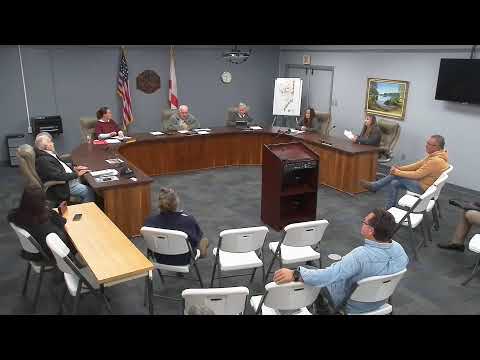
The Parker City Council voted unanimously on May 7 to leave a recently constructed retention pond unfenced after residents urged the city to require a barrier and council members reviewed state construction standards.
A resident who gave her address as 1344 Stratford told the council that a prior CRA meeting recorded that "there was $484,620 left in the ARPA funds" and said the CRA had voted to proceed with a fence. The resident asked the council to confirm the earlier vote and funding availability.
A member of the council who reviewed the site told the council that state rules limit allowable depth relative to slope and that "that particular retention pond was built so that legally, it did not require a fence," meaning the city did not have a statutory obligation to add one. Another council member noted that other nearby jurisdictions do not have fences around comparable retention ponds and framed the question as a council policy decision rather than a clear legal mandate.
Several residents pressed the safety angle. One parent asked, "If a kid falls in the water and drowns, who's responsible?" Council members and staff responded that liability would turn on the facts of any incident and could not be decided hypothetically in advance.
After the discussion the council moved to "leave it like it is"—effectively declining to require a fence—and the clerk conducted a roll call. The clerk recorded the council's vote as unanimous in favor of leaving the pond unchanged.
The council did not adopt a new policy or set aside funds at the meeting; instead members left the existing design and safety features in place and treated further action as a discretionary policy choice.