Get Full Government Meeting Transcripts, Videos, & Alerts Forever!
Get email alerts on the Emergency Medical Services topic
No spam. Unsubscribe anytime.
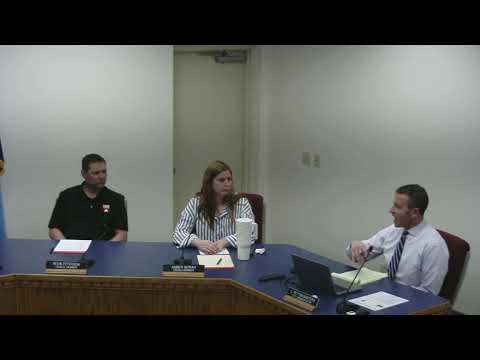
Sanford Ambulance presents response data to Dilworth council, warns staffing remains a challenge
Summary
Sanford Ambulance told the Dilworth City Council it handled roughly 600 calls in the city last year, highlighted a high bystander AED application rate, and said staffing shortages remain the largest operational challenge; council members asked detailed questions about staging, response times and data-driven post placement.
Sanford Ambulance representatives reviewed service data and operations for Dilworth on the city council's agenda, saying the company handled about 600 ambulance calls in Dilworth last year and that roughly half of calls are nonemergent.
"In Dilworth last year, we did, shy of 600 ambulance calls," said Tim Meyer, senior director of Sanford Ambulance. Meyer said roughly two to three calls a day is typical for the city and that critical response times for the most serious calls are just under seven minutes on average.
Meyer and Chad Mickelson, operations director, told the council the service is licensed to provide advanced life support across Clay County and is accredited at a national level. The presenters displayed call-volume heat maps and a five-year breakdown showing relatively stable volumes between 2019 and 2024.
Council members pressed on operational details: how ambulances are staged, who authorizes air medical launches, and how data informs posting locations. "We use historical data about every 6 months…we're moving to a new computer-aided dispatch system," Mickelson said, describing plans to refine posting schemes and pull additional reports to improve coverage.
The presentation also highlighted public-health and bystander response data. Sanford reported Dilworth had a bystander-applied AED rate of about 50 percent — higher than the regional and national averages — and encouraged continued CPR and AED training. "It's the family members that are gonna be most likely asked to do CPR on their loved one," Meyer said, describing outreach and training programs.
Meyer and Mickelson also described ongoing staffing pressures. "Staffing is the biggest challenge for EMS in our country," Meyer said, describing pandemic-era workforce losses and a multi-tiered recruitment approach including an internal paramedic academy that pays for training in exchange for a service commitment.
The council did not take formal action on the presentation. Members thanked the presenters and urged continued public outreach on CPR and AED awareness. The city asked Sanford to provide follow-up data on posting strategies and any impacts of the new dispatch system as it becomes operational.