Get Full Government Meeting Transcripts, Videos, & Alerts Forever!
Get email alerts on the Behavior Support Staffing topic
No spam. Unsubscribe anytime.
Georgetown ISD previews plan to add behavior coaches and paraprofessionals to support teachers
Summary
District leaders proposed adding district-level behavior coaches and campus paraprofessionals to support general-education teachers at priority campuses, saying the change aims to reduce teacher turnover and shorten response times for classroom behavior interventions. Trustees pressed staff on budget, accountability and whether hires should be phased in.
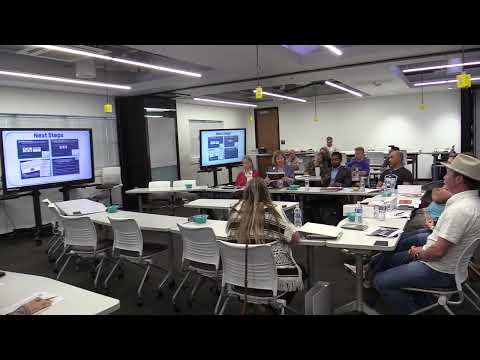
District leaders at a Georgetown Independent School District workshop previewed a staffing concept intended to give elementary teachers more in-class behavior support, saying the idea remains in the planning stage and no board vote was taken.
The proposal discussed by staff would create a team of general-education behavior coaches and campus-based paraprofessionals who would work directly alongside teachers at priority campuses. Tamara, an elementary principal who spoke during the workshop, described the current structure and said the district’s general-education behavior coordinator (Monica Myers) currently serves all campuses and the district is proposing to expand that capacity.
"So it would be 12 new people," Tamara said, describing the plan as four behavior coaches (each split between two campuses) plus eight paraprofessionals assigned to campuses to implement coaching suggestions and support students’ day-to-day logistics.
Monica Myers, the district’s general-education behavior coordinator, told trustees she often faces a multi-week delay after receiving requests for support. "Right now it's about a two week lag before that can be answered," Monica said, adding that more on-campus capacity would allow for more proactive coaching and quicker support to teachers.
Board members repeatedly pressed district staff on cost and implementation details. A committee member asked how the district would hire and hold staff accountable: "What's their schedule? How are they adding capacity? Would we want to do all 10 from the jump?" the member asked, urging consideration of a phased approach rather than hiring the full complement immediately.
Moderator (Speaker 1) told the board the idea is still in infancy, that staff are working on a framework defining appropriate classroom structures and common coaching language, and that the district is considering repurposing existing positions to limit the net budget impact. "We are looking at repurposing positions in the district currently so that there's ... a net increase in expenditures, but it won't be the volume that you see these 10 positions up with," the moderator said.
Trustees and staff discussed metrics the district would use to judge the effort. Staff repeatedly cited teacher retention as an outcome measure: Speaker 1 noted a recent average teacher turnover rate of about 22% and characterized lowering turnover as an intended metric for success. Monica said reducing that turnover rate is her "first metric." Trustees also asked for clarity on scheduling, role descriptions, credentialing or behavior background for hires, and whether the district would pilot the model at a few campuses before scaling.
No formal action was taken during the workshop; staff said next steps include developing a framework, clarifying job descriptions and estimating budget impacts prior to a request to the board for policy or budget approval.
The board adjourned at the scheduled close of the workshop without voting on the staffing plan.