Get Full Government Meeting Transcripts, Videos, & Alerts Forever!
Get email alerts on the Meals On Wheels Assessment topic
No spam. Unsubscribe anytime.
Southern Maine Agency on Aging embeds expanded Meals on Wheels assessment to identify dementia‑related needs
Summary
Renee Longerini, deputy director of the Southern Maine Agency on Aging, described how SMAA built an expanded in‑home assessment into federally required Meals on Wheels eligibility visits to detect dementia signs, increase internal referrals by about 75%, and sustain services using Older Americans Act funds.
Renee Longerini, deputy director of the Southern Maine Agency on Aging, described how her agency expanded the federally required Meals on Wheels eligibility assessment to identify people with dementia living alone and other unmet needs and to connect clients to services.
Longerini said SMAA added targeted questions and trained assessors and volunteers to spot signs of cognitive change and observable red flags — for example, repetitive questioning, difficulty following directions, expired food, unpaid bills, and pets not being fed. She said the federal eligibility assessment takes about 20–30 minutes and the expanded assessment was designed to keep total time at or under 45 minutes to remain practical for in‑home visits.
The agency piloted the tool, adjusted questions that did not prompt useful answers (for example replacing a broad transportation query with a specific question about whether clients can get to needed places) and embedded the expanded assessment into existing assessor workflows. ‘‘We trained both our volunteers and staff on signs of memory concern and red flags to look for,’’ Longerini said, noting annual refresher trainings to maintain skills.
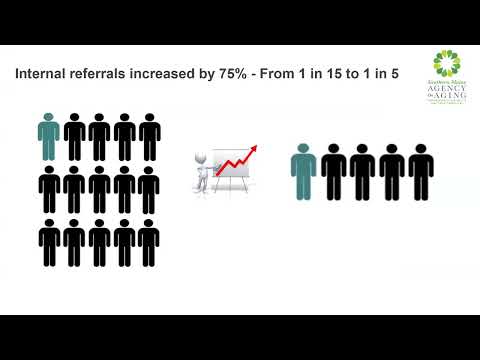
Longerini reported that internal referrals for additional services increased by about 75% after the expansion — from roughly 1 in 15 clients to about 1 in 5. Under the old blanket question, clients identified additional needs only about 6% of the time; after drilling down the rate rose to about 20%. SMAA said it has had procedures and a team in place to handle the higher referral volume and tracks needs by category (housing, transportation, nutrition, health insurance counseling, etc.).
Sustainability measures include expanding the pilot across all eight nutrition sites in York and Cumberland Counties, embedding the tool into daily workflows, using Older Americans Act funding for ongoing refresher training, and offering complementary programs such as a warming crew and a Phone Pals telephone reassurance program. Longerini emphasized the importance of fitting new tools into existing workflows and monitoring response times: internal referrals typically receive a resource specialist callback within two to three days, and staffing is adjusted if wait times increase.
Longerini acknowledged challenges in sustainability — choosing which questions to include, keeping assessments timely, training non‑social‑worker staff to ask sensitive questions, and breaking down program silos — and said a small leadership team that meets monthly supports cross‑program collaboration.
The assessment tool has been refined over nearly a decade and has been adopted or adapted by agencies statewide and nationally, Longerini said. She thanked the Administration for Community Living (ACL) for grant support and provided contact information for follow‑up.
The SMAA model demonstrates one approach to using federally supported assessment requirements and Older Americans Act funding to sustain dementia‑capable services after initial grant periods end.