Get Full Government Meeting Transcripts, Videos, & Alerts Forever!
Get email alerts on the Land Use topic
No spam. Unsubscribe anytime.
New Castle planning board refers wetlands question on 307 Millwood Road garage to ERB after engineers cite 10,916 sq ft buffer impact
Summary
On May 6 the New Castle Planning Board heard an informal presentation for a 68-by-50-foot accessory garage and a 12-foot gravel access drive at 307 Millwood Road; the board asked for revised disturbance figures, flagged a potential DEC jurisdictional determination and agreed to refer a narrow wetlands-impact question to the Environmental Review Board for its May 18 meeting.
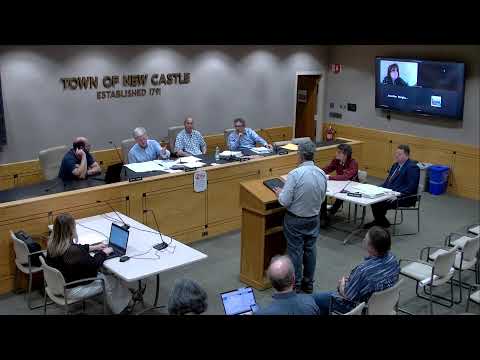
The New Castle Planning Board on May 6 heard an informal site-plan presentation for 307 Millwood Road and agreed to refer a narrow wetlands-question to the town’s Environmental Review Board (ERB) after engineers reported roughly 10,916 square feet of disturbance within a wetland buffer.
Engineer Alan Pilch of LP Engineering opened the presentation, mapping the 20-acre R‑1A property, the existing house and pool/ pool house, and describing access from Millwood Road. “The disturbance of the buffer, including the driveway, was calculated to be 10,916 square feet,” Pilch said, and he showed a proposed 68-by-50-foot collector garage and a 12-foot-wide gravel driveway that largely follows an existing dirt path.
The project team described stormwater controls intended to keep runoff out of the wetlands: a vegetated swale that will convey flows to a bioretention practice located outside the wetland buffer (about 60 feet by 36 feet and 12 inches deep), and pretreatment measures to protect the main treatment practice. “There’s gotta be some pretreatment done,” stormwater reviewer Jeff told the applicant, requesting additional design detail and a steep-slopes analysis to document disturbance where slopes are affected.
Applicant (identified in discussion as Bill) said the accessory building will be used primarily for storage of collector cars and property equipment, not for heavy mechanical work. “I’m basically storing equipment for the winter,” the applicant said; board members asked about interior drains and an oil/water separator and the team confirmed a separator tank and pretreatment will be required so vehicle fluids do not enter stormwater practices.
Planner Sabrina told the board the application raises no major zoning issues and called the submission a Type 2 action under the State Environmental Quality Review Act. “It’s a type 2 action under the state environmental quality review act,” she said, and she asked the team to correct a plan-set conflict and to show public water lines that serve the house and pool.
Environmental reviewer Dennis, after a site check, said flagging and the mapped wetland boundary largely matched field conditions but described a saturated, “spongy” soil pocket near the existing path that could affect mitigation and asked whether the applicants had sought a state jurisdictional determination (JD) from the Department of Environmental Conservation. “We should get a JD from the DEC to make sure you don’t need a permit from them as well,” Dennis said, and the board agreed obtaining clarity from DEC could be useful.
Board members debated whether converting the existing dirt footpath into a slightly wider gravel drive should be treated as adding permanent disturbance or as an existing non‑vegetative corridor that might reduce the net new impact. Dennis and staff suggested the disturbance figure could be refined to reflect existing conditions, vegetated swales, or other design choices that reduce permanent impacts.
The board asked the applicants to supply revised disturbance and tree‑replacement numbers for staff review. The town’s replacement calculation currently shows a substantial tree-replacement obligation (board discussion referenced replacement-equivalent figures near 62–92 trees depending on the metric); staff also reminded the applicant of a tree-fund payment option ($2,250 per replaced tree plus 10% contingency) if on-site replacement is impracticable.
Rather than delay the application, the board agreed to refer the narrow wetlands-impact question to the ERB for its May 18 meeting so the ERB can review the refined figures and advise whether the calculated buffer disturbance or compensatory mitigation approach should be adjusted. Pilch said he would supply the revised figures to staff but could not attend the ERB meeting in person.
Next steps: the applicant will provide corrected plan sheets showing public water lines, refined stormwater details including pretreatment and the steep‑slopes analysis requested by staff, and revised buffer‑disturbance and tree‑replacement calculations. The board flagged the possibility of a site walk and said a public hearing could be scheduled in June if revised materials are ready. No formal board decision on the site plan was taken at the May 6 meeting; the board adopted routine minutes and adjourned later that evening.