Get Full Government Meeting Transcripts, Videos, & Alerts Forever!
Get email alerts on the Municipal Budget topic
No spam. Unsubscribe anytime.
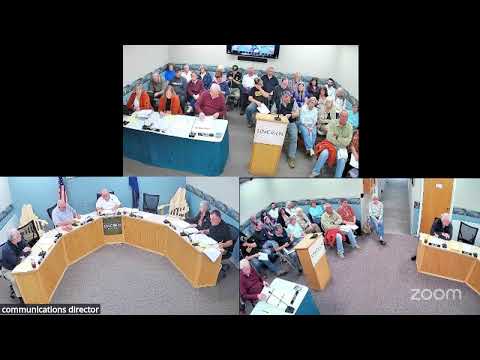
Lincoln hearing on FY2026 budget draws warnings from residents about taxes and services
Summary
At a public hearing on the proposed FY2026 municipal budget, residents urged fiscal restraint as staff reported assessment changes that may lower values; councilors debated town-manager pay, EMS/fire contracts and ambulance capacity, sidewalks and dam repairs, and several capital requests.
Lincoln — Residents and councilors spent a lengthy public hearing weighing tradeoffs in the proposed FY2026 municipal budget, with many speakers warning that higher spending would deepen pressure on households already struggling with fixed incomes.
The hearing opened with public comment, where longtime resident Fay Broadick, a member of the Lincoln Historical Society, said the town must "live within our means" and urged the council to consider affordability for older residents while also publicly thanking volunteers who maintain town property. Broadick also raised concerns about the town manager’s compensation and residency.
Why it matters: Council decisions on the budget will set next year’s tax burden. Staff told the council they are factoring a property revaluation into projections, and the debate over service levels — particularly ambulance and fire coverage — could affect both costs and emergency response in Lincoln and neighboring towns.
Council and staff responses Town Manager (identified in the hearing as the town manager) defended the decision to hire and pay competitive managers and department heads, noting that national guidance recognizes both sides of the question of whether a municipal manager must live in the community. He also described the town’s current practice of contracting with several specialized attorneys for labor, real estate and bond work.
Finance staff (referred to in the hearing as Mrs. Burr/Melissa) told the council that assessment work and sales analysis being used for the revaluation show substantial shifts in values that are being considered as the council sets the budget; staff characterized the expected change as a significant overall reduction in assessed values that the council should factor into tax-rate calculations.
EMS and fire services: revenue, contracts and capacity A prolonged portion of the hearing focused on fire and emergency medical services (EMS). Residents and at least one councilor questioned whether Lincoln is subsidizing other towns through intermunicipal contracts for services, arguing that those subsidies contribute to higher local costs. Others, including staff and councilors who support the contracts, said revenue from contract fees and patient billing helps fund Lincoln’s ambulance operations and that grant-funded training and state support have subsidized paramedic education.
Councilors and residents disagreed over operational options, including whether Lincoln could maintain service with fewer ambulances while protecting access for transfers to regional hospitals. Several speakers urged a follow-up workshop to model the fiscal and service impacts before making a final decision.
Other budget items discussed - Sidewalks: A resident asked about repairs on sidewalks between Hail Street and the hospital; staff said the Maine Department of Transportation must first repair an underdrain and that the town has funds reserved to install new sidewalk once state work is complete.
- Police fleet and staffing: The police chief described a plan to lease five new patrol vehicles to reduce maintenance costs on an aging fleet and explained the lease structure (yearly lease payment with a nominal buyout option). Councilors asked for supporting wage studies to justify proposed personnel pay adjustments.
- Transfer station and public works: Councilors reviewed requests for equipment (a tailgate spreader, a baler) and discussed using reserve fund balances to cover modest shortfalls; staff committed to verifying account balances and bringing more detail to the next meeting.
- Dam repairs and capital reserves: Multiple speakers emphasized the need for planned dam maintenance given development around Lincoln Lakes. Staff reported approximately $60,000 currently in a dam-repair reserve and referenced prior grant-funded studies and set-asides that require follow-up to confirm available funds.
What was not decided The hearing produced substantive discussion but no final votes on the FY2026 budget at this meeting. The council opened the public hearing, received comments and deferred remaining decisions, asking staff to provide more precise account balances, the five-year capital plan, and investment-account returns at the next meeting.
Representative quotes - "I think number one that the town manager ought to live in Lincoln," Fay Broadick said during public comment. - Resident Bob Delansancy asked: "Why we have a town manager that doesn't live in Lincoln?" - The town manager said the International City Managers Association "says there are two points of view" about residency and defended the council’s choice to seek specialized legal counsel for complex work.
Next steps The council closed the public hearing at about 7:29 p.m. and moved to adjourn, scheduling follow-up work and requests for more detailed financial information at a future meeting. No formal budget vote was taken that night.
Sources: Lincoln Town Council public hearing transcript.