Get Full Government Meeting Transcripts, Videos, & Alerts Forever!
Get email alerts on the Cpace Financing topic
No spam. Unsubscribe anytime.
Mechanicville council adopts Energize New York CPACE financing after public hearing
Summary
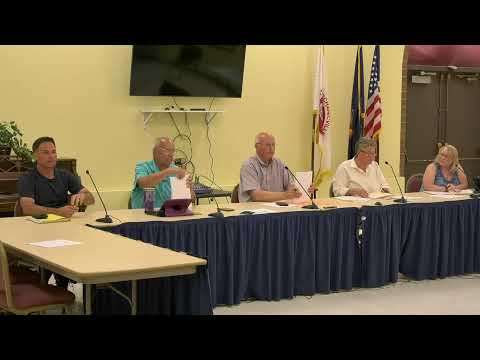
The Mechanicville City Council unanimously adopted the Energize New York CPACE (commercial property assessed clean energy) financing program following a public hearing in which program administrators said the program uses private capital, places no cost on the city and is targeted to commercial properties.
Mechanicville ' The City Council voted unanimously to adopt an Energize New York commercial PACE (CPACE) financing program after a public hearing that drew detailed questions about tax effects and foreclosure scenarios.
The council approved Resolution 67, adopting the Energize New York CPACE program and authorizing the mayor to sign implementing documents. Mayor Butler and all commissioners voted yes.
Program administrators from the Energy Improvement Corporation (EIC) described CPACE as a financing mechanism that lets commercial property owners access private capital to fund energy-saving measures such as solar panels, heat pumps and insulation. "The program places no burden whatsoever on the municipality," said Susan Mor, who identified herself as CEO of the Energy Improvement Corporation, adding that municipalities do not pay to participate and the only fees are charged to participating property owners.
John Guido, who spoke alongside Susan, described a local example: a proposed redevelopment at 10 North Main Street that EIC estimates could generate roughly 20,000 hours of local labor and benefit from CPACE financing while meeting historic-preservation requirements.
During the public hearing and a council Q&A, members pressed EIC on how CPACE assessments interact with property taxes and tax-sale processes. Commissioner Blet asked what happens if a property with a CPACE assessment falls into tax delinquency. Susan Mor said the program is structured so the municipality does not assume the CPACE debt: lenders are paid first and any municipal obligations are limited; the assessment remains attached to the property and any outstanding annual assessment would be addressed at sale or auction. "If there is a foreclosure or tax auction, the assessment is still an obligation on that property," Susan said, while reiterating the city would not bear the cost.
Public commenters voiced concerns about resale and tax-auction complications. A resident, Kim of South Main Street, asked whether a CPACE assessment would make a foreclosed property harder to sell; EIC acknowledged that added municipal assessments can affect marketability in marginal cases but emphasized improved operating savings and energy performance as selling points.
EIC representatives also clarified scope and safeguards: the program as presented was commercial-only, transactions can be prepaid at sale, and EIC said it vets lenders and requires inspections and verification of energy savings before financing is finalized.
Why it matters: Adopting the CPACE program gives Mechanicville a financing tool aimed at encouraging private investment in energy efficiency and renewables without using taxpayer funds, potentially supporting local redevelopment projects such as the Riverside Center.
Next steps: With the local law adopted, the mayor is authorized to execute necessary agreements with EIC and the program administrator can begin onboarding qualified lenders and projects. The council did not authorize any particular CPACE project as part of the vote; project approvals and financing decisions will follow the program rules and separate applications by property owners.