Get Full Government Meeting Transcripts, Videos, & Alerts Forever!
Get email alerts on the Curbside Collection topic
No spam. Unsubscribe anytime.
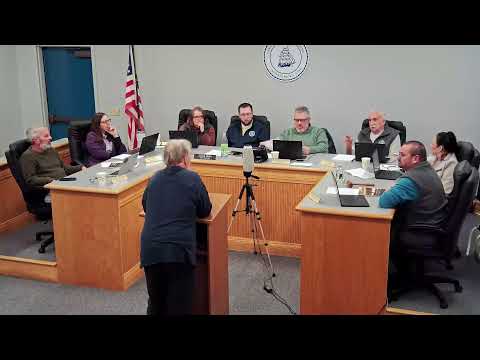
Casella presents curbside pickup plan to Bucksport council; town weighs similar net cost to transfer station and operational tradeoffs
Summary
Casella Waste outlined a curbside collection proposal for Bucksport, emphasizing safety and widespread side‑load cart deployment. The town heard a cost comparison—transfer station operations roughly $450,000 versus a Casella contract at $221,000 plus roughly $120,000 in tipping fees—along with discussions on private‑road logistics, cart counts (about 1,800), fuel surcharges and disposal destination concerns.
Casella Waste presented a curbside collection proposal to the Bucksport council and answered detailed questions about costs, cart deployment, private‑road logistics and disposal arrangements. Town presenters provided a high‑level cost comparison showing the town’s current transfer‑station operations at roughly $450,000 annually; the Casella contract bid the town received was listed at $221,000 with an estimated $120,000 in tipping fees, which the meeting described as leaving a similar ballpark overall cost compared with the existing model.
Jim Dunning, a Casella representative with about 20 years’ municipal experience, said his company favors side‑load cart collection primarily for worker safety and operational consistency. "Solid waste collection worker is one of the top 10 deadliest jobs in the country," Dunning said, and he contrasted side‑load collection with higher risks he associated with rear‑load collection. Dunning explained Casella would deliver and warranty 96‑gallon carts (with 64‑gallon options), typically depreciated over a 10‑year span and included in the multi‑year contract pricing. He cited an initial deployment estimate of about 1,800 carts for Bucksport and said the plan can be adjusted for requests or swaps.
Councilors and attendees pressed Casella on rural and private‑road service (long driveways, camp roads), snow and plowing concerns, special handling for steep or tight locations, and how bulky items or cruise‑ship/event surges would be handled. Dunning described several common local solutions: tiered pickup rules for private roads, consolidated collection points or on‑site dumpsters for very remote areas, and the use of open‑top roll‑offs for periodic bulky‑item cleanups. He said recycling and mixed‑waste processing would route through the Municipal Review Committee hub (Hampden/MRC) under typical arrangements, and that the contract language would specify the town’s chosen disposal destination.
Public commenters raised legal and long‑term risk questions. A resident urged the council to research contractor histories and consider litigation costs tied to contracting and to local enforcement when state agencies do not pursue enforcement. Don White of Town Farm Road asked that disposal destination be explicit in writing, saying he was concerned a contractor relationship could create a "municipal hookup" that might allow private‑landfill operations to reopen; Dunning responded that the town chooses the disposal destination and that Casella currently hauls to the MRC in Hampden.
The meeting produced no formal decision on moving to curbside collection; councilors and the committee asked staff to refine counts, routes, contingency planning for private roads and event volumes, and to have disposal destination and fuel‑surcharge language spelled out in any draft agreement before action.