Get Full Government Meeting Transcripts, Videos, & Alerts Forever!
Get email alerts on the Solar Grazing topic
No spam. Unsubscribe anytime.
Olivia Calhoun urges solar grazing as a way to keep farmland working
Summary
Olivia Calhoun, a Chapel Hill FFA member, told the Titus County Commissioners Court on May 26 that 'solar grazing'—grazing sheep beneath solar panels—can allow energy development to coexist with agriculture, citing acreage and contract-rate figures and arguing grazing supports soil health and local producers.
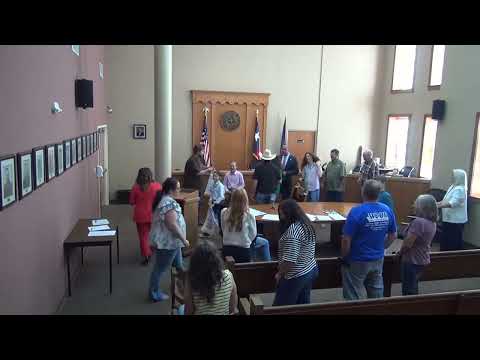
Olivia Calhoun, a Chapel Hill FFA member, told the Titus County commissioners court on May 26 that solar farms do not have to spell the end of farming in Titus County and similar rural areas.
Calhoun said solar farms have changed the local landscape and promoted 'solar grazing'—using sheep to manage vegetation beneath and around panels—as a way to maintain agricultural activity on land used for energy production. "Solar farms are quickly giving up much of the land that has historically been agricultural production," she said, and described solar grazing as a practice that can allow panels and pastures to 'work together.'
Why this matters: Calhoun framed solar grazing as an economic and environmental compromise for rural communities. In her prepared remarks she cited several figures—including an assertion that 1.25 million acres of U.S. farmland have been converted to solar, that Texas has invested heavily in solar capacity, and that grazing contracts can range from about $250 to $750 per acre—then described benefits she attributed to grazing under panels: reduced vegetation-management costs, improved soil organic matter and pollinator habitat, and shade benefits that reduce heat stress on sheep.
Calhoun outlined three perspectives on solar grazing: developers (who save on mowing and herbicide costs), sheep producers (who can lease flocks and secure steady pasture) and surrounding farmers (who may keep land agriculturally active). She said grazing can diversify producer income and make land ready for future farming after panels are removed.
Calhoun's presentation mixed personal observation and cited figures; the numbers and benefits she described were presented as claims and supporting context rather than independently verified facts within the court meeting. The court recognized the students and did not take formal action on the presentation.
Direct quotes and context: "Solar grazing encourages a sustainable diverse way to utilize land that has been repurposed for panels," Calhoun said, arguing that the approach can benefit solar companies, livestock producers and farmers. The speech drew praise from court members during the recognition portion of the meeting.
Next steps: The presentation was part of a youth recognition segment; no purchase, ordinance, contract or formal county policy on solar grazing was proposed or voted on at the May 26 meeting.