Get Full Government Meeting Transcripts, Videos, & Alerts Forever!
Get email alerts on the Data Center topic
No spam. Unsubscribe anytime.
Residents press Hutchinson utility for answers on proposed data center’s water, noise and expansion risks
Summary
Two residents urged city and utility officials to provide clearer information about a proposed roughly 7,500-square-foot data center, raising concerns about power demand, noise, water use, long-term expansion and notification of nearby school parents.
Jeremy Lee, who said he works in the electronic component industry, urged Hutchinson officials to slow down and answer long-term questions before infrastructure approvals for a roughly 7,500-square-foot data center move forward.
"Small does not mean insignificant, especially in a community like ours," Lee said, asking for independent sound studies, water-use disclosures and clear limits on future expansion.
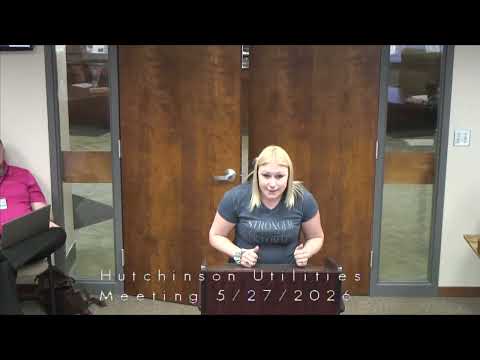
Why it matters: Residents said Hutchinson’s history of industrial contamination increases the stakes for new, high-power facilities. Brittany Eckstein, another resident who spoke at the meeting, said citizens felt dismissed during a recent city-council discussion and asked why property-notification rules (a 350-foot radius) and school outreach had not reached more families near the proposed site.
Officials and staff responded that the data-center operator told them it will use an air-cooled system rather than a glycol-based cooling loop, a change staff said should reduce some liquid-handling risks but could increase noise and electrical load. Utility staff also told the meeting that the customer is designated as interruptible and is contracted to pay wholesale and infrastructure costs rather than shifting them to other ratepayers.
Residents repeatedly raised water and pollution concerns and cited local legacy contamination as a reason for extra caution. "We already have to worry about forever chemicals due to 3M," Eckstein said, asking how the city will ensure long-term protections for drinking water and children at a nearby school.
Exchange and follow-up: Staff asked residents to submit specific questions by email so utility staff could gather technical answers; officials said state regulators and the U.S. Environmental Protection Agency also play roles in permitting and monitoring. Staff emphasized that any major increase in the customer’s power draw beyond the currently negotiated roughly 20 MW limit would require regional transmission and market approvals and could not happen unilaterally.
What remains unresolved: Residents pressed for clearer public notification of similar projects and for independent studies on noise, water and air emissions; staff committed to compiling answers but did not provide definitive independent-study results at the meeting.
Next steps: Officials encouraged residents to send written questions and said staff would try to gather technical responses and involve appropriate state or federal agencies as needed.