Get Full Government Meeting Transcripts, Videos, & Alerts Forever!
Get email alerts on the Public Meetings topic
No spam. Unsubscribe anytime.
Trainer warns Bethany boards against misuse of executive sessions and off‑the‑record deliberations
Summary
At a Bethany training, Russell Blair cautioned that executive sessions require careful use: a two-thirds vote, a stated reason on the agenda, no voting in private, and limited allowed topics (personnel, pending litigation, property negotiations, exempt records); misuse risks FOI complaints and hearings.
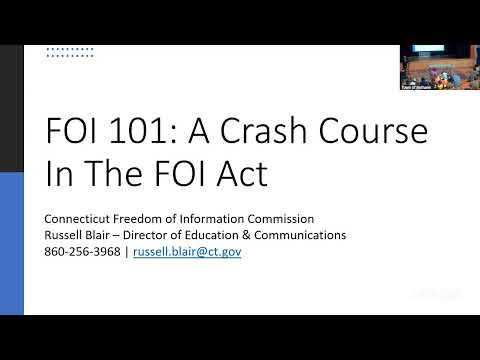
Russell Blair of the Connecticut Freedom of Information Commission told Bethany officials that executive sessions are a limited tool whose misuse can prompt complaints and formal hearings. "You need a two-thirds vote to go into executive session," he said, and the motion should state the reason the board is entering a closed session.
Blair explained permitted topics for executive session under the statute: personnel matters (with notice to the subject in many cases), pending litigation or imminent legal threats, contract or property negotiations where publicity would affect price, and any records that are otherwise exempt from disclosure (for example attorney-client communications or bid proposals under negotiation). He emphasized that boards cannot vote on matters while in executive session; formal votes must occur in public.
He advised boards to default toward openness: if it is unclear whether a closed session is warranted, that ambiguity likely indicates the discussion should be public. "If you're really struggling to figure out if it is or not, that's probably an indication that that it isn't," Blair said. He also cautioned that executive sessions attract public suspicion and that the Commission may investigate when citizens file complaints.
The training also covered related meeting risks: informal deliberations by a quorum via email or casual gatherings, failure to post adequate agenda descriptions, and the narrow criteria for emergency meetings. Blair recommended documenting the topic on the agenda when feasible, using small fact-finding groups (less than a quorum) for preparatory work, and using executive session only for statutorily permitted reasons.