Get Full Government Meeting Transcripts, Videos, & Alerts Forever!
Get email alerts on the Moratorium Zoning topic
No spam. Unsubscribe anytime.
Linn County adopts 12-month moratorium on battery storage, data centers, crypto mining and certain private transmission lines
Summary
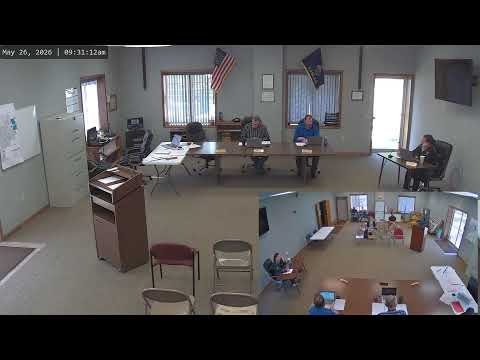
The Linn County Board of Commissioners on June 1 approved Resolution 2026-17 (as amended), imposing a temporary 12-month moratorium in unincorporated county areas on battery energy storage systems, data centers, cryptocurrency mining and private non-utility renewable transmission lines while planning staff draft zoning text amendments; an attorney for Clearway Energy warned the board the moratorium could prompt litigation.
The Linn County Board of Commissioners voted June 1 to adopt Resolution 2026-17, a 12-month moratorium that pauses acceptance, filing, processing, hearing and approval of applications for battery energy storage systems, data centers, Bitcoin and cryptocurrency mining facilities, and private non-utility renewable transmission lines in unincorporated county areas while the Planning and Zoning Commission evaluates possible zoning text amendments.
Commissioners read the amended resolution into the record and approved it after a motion and second. The board carried the measure by voice vote; commissioners said “I” in response to the call for votes and the motion was announced as carried. The resolution directs the planning and zoning body to review related regulations to ensure consistency with the county’s comprehensive plan and health and safety standards.
During the public-comment period before the vote, Melissa Vancram, an attorney with the Ralph Fretz White Goss Law Firm, addressed the commission on behalf of Clearway Energy. Vancram said the commission’s previous attempt to impose a moratorium had targeted an interstate transmission line connected to her client’s project and lacked public notice and proper procedure. “The moratorium proposed is not lawful or in the best interests of the county or its citizens,” she told commissioners, saying the measure would be “discriminatory” and risk costly litigation if the county impeded a lawful project. Vancram added that her client had submitted a building-permit application and a fee to preserve its rights to proceed and that any improper hold on processing or construction “will land the county in court.”
Vancram also told the board that utilities and related facilities already exist in the county and that state and federal regulations, and the regional transmission operator, also govern such projects. She said her client was willing to discuss details and economic benefits but urged the board not to attempt to stop or delay a lawful use on industrially zoned property.
The moratorium language adopted June 1 explicitly covers the specified uses while Planning and Zoning prepares any necessary zoning-text changes; the board did not announce any vote tallies for or against individual commissioners. The resolution takes effect immediately for the specified permit processes and remains in place for up to 12 months while staff consider regulatory changes.
Next steps indicated by the commission are administrative: Planning and Zoning will review and propose text amendments to the county’s zoning regulations. The commission did not indicate a timeline for Planning and Zoning’s work or a date to lift or renew the moratorium.
(Reporting: Melissa Vancram, public comment; Official action: Resolution 2026-17 accepted by the Board of Commissioners.)