Get Full Government Meeting Transcripts, Videos, & Alerts Forever!
Get email alerts on the Badge Access topic
No spam. Unsubscribe anytime.
Buncombe County elections board adopts limits on board badge access to warehouse
Summary
The Buncombe County Board of Elections voted to adopt a staff-drafted resolution restricting automated badge access to high-security areas, including the election warehouse, requiring staff presence or scheduled visits and preserving the director's role in coordinating access.
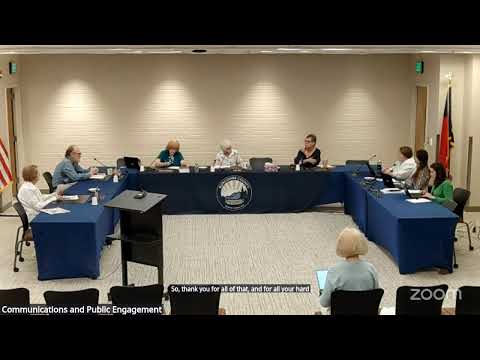
The Buncombe County Board of Elections on Thursday adopted a resolution restricting automated badge access to high-security election spaces, including the county's election warehouse, after an extended debate over security, supervision and public optics.
Board members debated a staff-drafted document that would remove blanket badge access to the warehouse and instead require either staff presence, a provided warehouse schedule, or bipartisan pairs when board members visit. The draft explained the county's access-control system cannot be set to unlock a board member's badge only when a staff member is present, so the compromise centers on scheduling and escorted access rather than automated unlocking.
The issue drew lengthy discussion about oversight and the board's supervisory role. "I see a huge risk. The optics wouldn't be good," said Jake, a board member who cautioned against unsupervised entry to the high-security space. Other board members said access is necessary for the board to exercise its statutorily assigned responsibilities for safekeeping of election facilities, arguing that board oversight sometimes requires on-site observation.
Karine, the board's executive director, urged caution and defended the staff revisions, saying the limits were meant to "protect the election system" and to avoid creating undue pressure or intimidation for staff. She noted the county had advised that the badge system could not be reconfigured to indicate staff presence in the warehouse and said the proposed approach balanced access and security. "We've already seen newspaper articles that are reporting things that aren't accurate," Karine added during the discussion.
After members debated versions of the draft and read sections aloud to resolve discrepancies between color-coded and cleaned copies, a motion to adopt the staff-provided draft was seconded and put to a vote. The board voted in favor; the meeting record shows the motion carried after members were asked to signify assent vocally, though a roll-call tally by name was not recorded in the transcript.
The adopted resolution as presented requires that board access to designated high-security areas either occur during staffed hours or follow the schedule/escort procedures in the document; it also reiterates that board members shall not individually direct staff in the completion of duties and that concerns about staff conduct should be raised through the director. Members agreed the policy could be revisited if the knock-and-enter or scheduling approach proves impractical.
The board's next meeting was set for June 23 at 5:30 p.m., when staff will hold a public input session on the early-voting plan. The board indicated it would continue to refine wording and revisit the access policy if operational issues arise.