Get Full Government Meeting Transcripts, Videos, & Alerts Forever!
Get email alerts on the Federal Reserve Independence topic
No spam. Unsubscribe anytime.
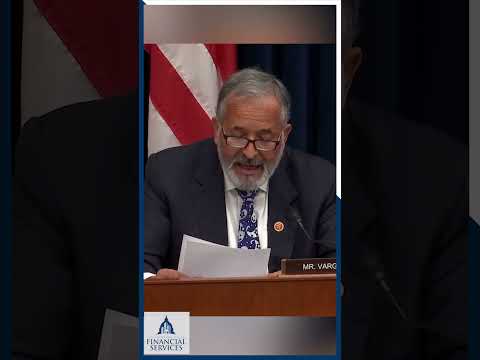
Committee member warns presidential pressure threatens Federal Reserve independence
Summary
A House Financial Services Committee member warned that recent presidential interventions and public pressure risk politicizing the Federal Reserve, citing alleged attempts to remove a Fed governor, a referenced Department of Justice inquiry, and rising interest costs that the speaker said now exceed defense spending.
A committee member on the House Financial Services Committee warned that recent presidential interventions risk undermining the Federal Reserve’s independence, saying such pressure could prompt politically driven monetary policy and long-term economic harm.
The speaker opened with historical context, noting that the Treasury-Fed Accord after World War II established that "Monetary policy must remain independent and not be used to finance the country's debt," and argued that that principle remains essential today. The committee member defended the Fed’s crisis tools, saying the central bank’s ability to expand its balance sheet in 2008 and 2020 "prevented what could have been a far worse economic catastrophe," and warned any new constraints should not impair that capacity.
The member accused the president of repeated interventions to bend the Fed, saying the president "has attempted to illegally fire Fed Governor Dr. Lisa Cook" and that, according to the speaker, the Department of Justice opened a criminal inquiry into "Chairman Pal" and planned an appeal after a judge struck down subpoenas. Those assertions were presented by the committee member during remarks and were not substantiated with corroboration in the transcript.
Quoting a June Truth Social post by the president, the committee member said the president wrote that if the Fed were "doing their job properly, our country would be saving trillions of dollars in interest costs," and used that post to illustrate public pressure on the Fed’s decisions.
The speaker highlighted fiscal concerns, saying the national debt is at "around 120% of GDP," and that interest payments have recently surpassed defense spending to become the third-largest federal expense behind Social Security and Medicare. The committee member said these fiscal strains underscore why Congress—not the Fed—must address deficits, criticizing a recent large bill the speaker described as adding "more than $3 trillion to the deficit over 10 years." The speaker argued that urging the Fed to cut rates to mask fiscal policy choices would be "both reckless and [set] a dangerous precedent."
Invoking international examples, the member warned that governments that force central banks to finance debt can trigger hyperinflation, citing Argentina and Zimbabwe and saying that in Turkey, actions to remove central bank governors helped push inflation toward 80 percent.
The committee member concluded by urging protections for the Fed’s independence to prevent politically driven cycles of high inflation and then yielded back to the chair.