Get Full Government Meeting Transcripts, Videos, & Alerts Forever!
Get email alerts on the Juvenile Justice topic
No spam. Unsubscribe anytime.
State juvenile corrections official: Valley County shows fewer youths on supervision but more serious charges in 2025
Summary
A state juvenile corrections representative told commissioners that arrests and petitions diverge in Valley County this year, detention admissions merit monitoring and probation/diversion closure rates reported at 100% for 2025 (small samples); felonies increased and the county used community‑based funds for four youths.
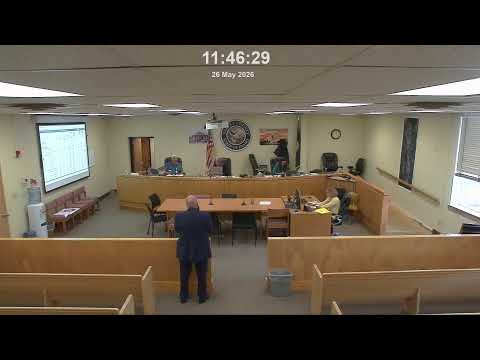
Alicia Baptist of the Idaho Department of Juvenile Corrections updated Valley County commissioners on May 26, presenting 2025 data showing a complex pattern: fewer youths on probation and diversion intakes but an increase in the seriousness of charges filed.
Baptist told the board the county’s ISP/NYERS arrest data listed roughly 20 arrests while petitions (formal charges) numbered 10 during the reporting period, an unusual reversal explained by practices such as officers detaining youths for incidents that do not always lead to petitions. "Petitions are the charges that a youth might go to court on," she explained, noting multiple petitions can stem from a single arrest.
Key findings: detention admissions and arrests are signal measures Baptist watches closely; Valley County had zero youths committed to the Idaho Department of Juvenile Corrections during the report period but showed an uptick in felony charges—primarily burglaries and malicious injury to property. The report also noted probation intakes fell from 12 to 9 and diversion intakes dropped from 35 to 10. For 2025 the county reported 100% success rates for both probation and diversion closures in the dataset presented, though Baptist cautioned that small sample sizes can exaggerate percentage swings.
Baptist reviewed recidivism tracking (6/12/24 months) on older cohorts and said that for a 2023 cohort of 11 youths, three had reoffended within 24 months (27%), a raw count that she emphasized was small. She also reported 135 hours of community service completed during the reporting period and $501 paid to victims as restitution, explaining that payment data can reflect orders from earlier periods.
On services and funding, Baptist said Valley County used community‑based alternative services (CBAS) funds for four youths in 2025 for needs such as counseling and transportation; no SUDS (substance use disorder) funds were required this year. She recommended tracking mental‑health needs closely: "We're seeing an uptick of mental health issues out there — both adult and juvenile," she said. Commissioners asked clarifying questions about custody, how juvenile cases can remain under juvenile jurisdiction past 18 in some circumstances, and what community service assignments look like locally.
What happens next: Baptist and local administrators will continue to monitor petitions, detention admissions, and recidivism; commissioners asked county staff and local probation officers to keep working with families and community partners on diversion and service referrals.