Get Full Government Meeting Transcripts, Videos, & Alerts Forever!
Get email alerts on the Electric Vehicles topic
No spam. Unsubscribe anytime.
Porter hears plan to use INDOT/NIRPC allotments to buy EVs and install Level 2 chargers
Summary
Drive Clean Indiana outlined a regional INDOT grant that would provide up to $33,280 per vehicle and $16,000 per Level 2 public charger (each up to 80%) and said contracts are expected after regional commission action and in early 2026.
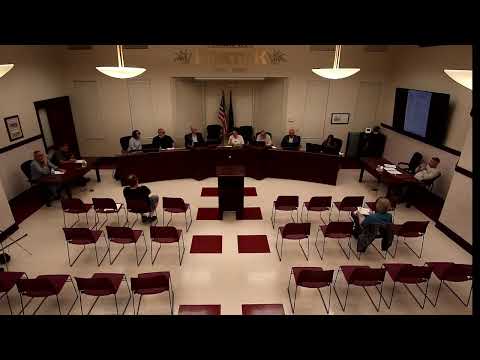
Ryan Liick of Drive Clean Indiana presented a regional zero-emission vehicle grant to the Town of Porter council and outlined how federal funds would be routed through INDOT and the Northwestern Indiana Regional Planning Commission to support municipal fleet electrification and public charging stations.
Liick said the federal allotments are $33,280 per electric vehicle and $16,000 per Level 2 public charging station, each not to exceed 80% of total project costs. “The allotments are for electric vehicle purchases at $33,280 — that is the federal funds that are allocated per electric vehicle, not to exceed 80% of the total cost,” he told the council.
Using an example discussed in the presentation, Liick showed how multiple vehicles in a group application translate into larger aggregate federal allotments: he described a four-vehicle example with federal funds totaling $133,120 and a local match of roughly $74,880. For charging infrastructure, he said federal funding would cover up to $16,000 per Level 2 station with a typical $4,000 local match.
Liick recommended that the town expect to pay upfront for vehicles and seek reimbursement through a reimbursement-grant contract once executed. He said the regional transportation improvement plan would be amended at a regional commission meeting in December and that individual contracts from INDOT to the town could arrive beginning in 2026.
The presenter described two charger types the town could deploy: lower-cost universal “wall” chargers (which he said several municipalities use as public plugs) and higher-capacity fleet chargers that come bundled with some EV truck purchases. He noted the most significant installation costs are civil works — trenching and concrete — and that ongoing maintenance and warranty arrangements can be included in procurement packages. Liick said Tesla universal wall connectors were available as donations and estimated their retail value at about $1,600 apiece.
Council members asked about operational details for first responders and cold-weather range impacts. Liick said the town’s decision about vehicle models and locations for chargers would determine suitability for police and fire operations and cited an estimated 10–15% winter-range reduction in colder months.
The presentation closed with Liick offering follow-up assistance, including further briefings on vehicle availability and charger siting. There was no formal council action on the grant during this meeting; members reserved details such as charger siting and final procurement until contracts and legal review are complete.