Get Full Government Meeting Transcripts, Videos, & Alerts Forever!
Get email alerts on the District Budget topic
No spam. Unsubscribe anytime.
Downers Grove School District 58 proposes $1.5 million savings package to shore up finances as state reimbursements lag
Summary
Administrators recommended $1.5 million in reductions and efficiencies to erase projected five‑year deficits and set aside $750,000 annually for capital maintenance, citing a $1.4M FY2025 shortfall, reduced state categorical reimbursements (proration), and rising transportation costs.
Downers Grove School District 58 officials on Jan. 26 proposed a $1.5 million package of reductions and operational changes intended to stabilize the district’s budget, rebuild reserves and free up $750,000 a year for capital maintenance once current referendum projects are complete.
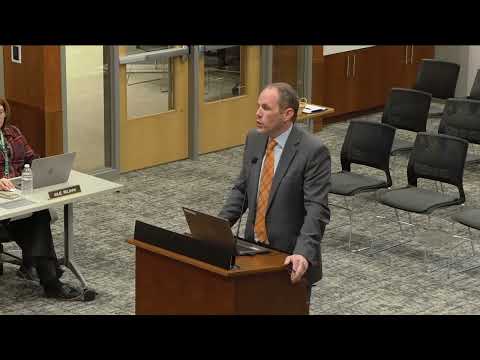
Dr. Gregory Harris, the district’s chief school business official, said the district ended fiscal 2025 with expenditures exceeding revenues by about $1.4 million and is confronting three linked problems: difficulty balancing the annual budget, eroding fund balances that threaten the district’s ability to meet spring cash needs, and insufficient operating dollars for ongoing capital upkeep. “Those are the three cracks in the foundation of the district from a financial point of view,” Harris told the board.
Harris and other administrators blamed a combination of factors: a short‑lived spike and subsequent pullback in the corporate personal property replacement tax (CPPRT), lower CPI that limits property‑tax growth, the end of federal ESSER grant flexibility and—most prominently—state proration of mandated categorical reimbursements such as transportation and special‑education tuition. The district reported special‑education transportation costs have grown about 164% over five years while state reimbursements rose only about 54%, producing a multi‑million‑dollar funding gap.
At current funding levels, Harris said District 58 received roughly $4,435 in new Evidence‑Based Funding (EBF) money in the year discussed, effectively leaving state support flat. “We are being quote‑unquote held harmless,” he said, adding that the result is a need to reallocate property‑tax dollars to cover mandated services.
To address the shortfall, administrators recommended a mix of immediate efficiencies and staffing and program changes that together exceed $1.5 million. Key proposals described to the board included: - Transportation changes, including consolidating parochial routes (the district currently runs 12 routes to nonpublic schools) with an estimated near‑term saving of about $250,000 and other route efficiencies to reduce the roughly $7 million annual transportation budget; - Operational and technology shifts, such as moving to lower‑cost or state‑provided student‑content filtering and reworking subscription and copying contracts (estimated savings of tens of thousands of dollars); - Program and staff adjustments, including the equivalent of 1.5 interventionist positions and elimination of four instructional coaching roles (retaining a single behavioral coach), restructuring certain administrative roles and reducing some support‑staff hours.
Administrators repeatedly emphasized a priority to protect classroom teachers and class‑size targets while making cuts. “We did not want to change where our class sizes are here in District 58,” the board’s administration said when describing the tradeoffs.
Board members pushed for clarity on assumptions and timing: the board asked when the state typically finalizes proration and new funding levels (budget approvals commonly occur in late May). Administrators said they were planning conservatively—assuming flat mandated categorical funding—and would continue monitoring as state and federal budget processes unfold.
District leaders also described advocacy plans. They said DuPage County districts and statewide associations are pursuing legislative fixes to proration and that District 58 will press local and county leaders for help offsetting unique costs tied to an interim housing center and McKinney‑Vento transportation obligations.
The administration presented the $1.5 million figure as arrived at in collaboration with the district’s Financial Advisory Committee and with the intent to erase projected deficits over the five‑year forecast while still funding $750,000 in annual capital maintenance. Officials noted that referendum bond proceeds are restricted to capital projects and cannot be used to cover operating shortfalls or teacher salaries.
The board did not vote on specific staffing actions at the meeting; administrators said formal personnel decisions would follow the board’s deliberations and must be finalized by statutory deadlines (administrative decisions before April 1; certified teaching positions before April 15). The meeting concluded with announcements about upcoming FAC and board meetings and the board’s adjournment at 8:57 p.m.
What happens next: district staff will refine cost estimates, work with First Student (transportation vendor) and parochial schools to finalize route changes, continue advocacy with ISBE and local legislators, and present implementation plans to the board for decisions this spring.