Get Full Government Meeting Transcripts, Videos, & Alerts Forever!
Get email alerts on the Municipal Budget topic
No spam. Unsubscribe anytime.
Public commenters flag persistent bookkeeping errors and heavy reserve draws in Shelby's 2026 budget
Summary
At a July public meeting on the 2026 town budget, residents and board officials described long‑running bookkeeping miscodings carried from 2017 onward, roughly $1.9 million in reserve use over two years, and the likelihood of future tax increases unless accounting and staffing gaps are fixed.
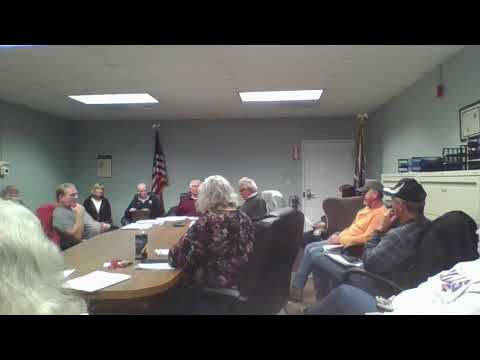
A public comment session on Shelby's 2026 budget on July 31 focused on longstanding bookkeeping errors, large withdrawals from reserves and the risk those issues pose to future tax rates. Chair opened the meeting and invited public comment; Waters, a resident of Shelby Center, led a lengthy review of line‑item discrepancies and historical problems.
Waters told the board that the general fund appropriations were overstated by about $3,000 in the published budget and that the printed budget omitted the 2025 column for fire districts, calling attention to multiple apparent miscodings. "For some reason there was a mistake ... so that'll be a correction that we'll make," a town official responding to questions said, acknowledging staff had already identified the $3,000 error and promising a fix.
Speakers at the meeting repeatedly linked current budget confusion to prior years. Waters and a town official said bookkeeping errors dating back to 2017 were carried into 2023 and 2024, and that a contracted firm (LGSS) used earlier had contributed to problems in the accounting record. The town official said some computer files are difficult to locate and that staff are reconciling items now.
Residents and board members cited reserve fund use as a central concern. Participants said the town withdrew about $917,939 in one year and roughly $990,957 in another for a combined total near $1.9 million over two years, and that those withdrawals had masked tax increases in the past. "Part of that actually went..." Waters said, noting the use of reserves was one reason taxes had not risen as much earlier but warning that continued draws would make future tax increases more likely.
The town official described efforts to reclassify misallocated expenses (for example, moving office supplies from general building accounts into a centralized records management line) and said the town has added a visual accounting tool in new software to trace allocations more clearly. Several commenters urged more detailed monthly reporting and tighter payroll and line‑item controls.
No formal votes were taken at the public meeting. Board members and the town official said additional work is needed: staff will continue reconciling historical entries, correct the specific overstatements called out by commenters, and present revised figures that reflect those corrections.
The board closed the public comment session after a roll call; participants were told the board will "take the comments under consideration" and may bring corrected budget figures to future board discussions.