Get Full Government Meeting Transcripts, Videos, & Alerts Forever!
Get email alerts on the Public Safety topic
No spam. Unsubscribe anytime.
Canterbury select board debates pay changes aimed at stabilizing EMT staffing
Summary
After an extended presentation from Ray McGillbury, the Canterbury select board directed the town's fire/EMT team to draft a tiered pay-scale policy and return within weeks rather than immediately adopt an across-the-board wage bump; a motion to raise base pay to $22 was made and later withdrawn.
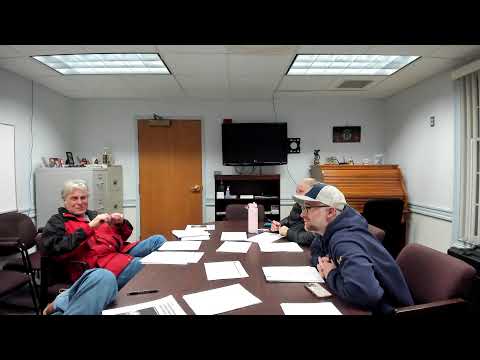
The Canterbury Board of Selectmen spent the bulk of its Jan. 2 meeting on emergency medical staffing, discussing pay, retention and a draft financial impact analysis aimed at making the town's EMT and firefighter corps more competitive.
Ray McGillbury, introduced to the board to lead the discussion, told members the department is "having trouble hiring people because they're going to the places that are paying a little bit more," and presented a packet showing the town budgets $295,000 for EMS but has recently spent about $223,000. He said paid staffing currently covers roughly 67% of shifts and that neighboring towns typically pay more, making recruitment and retention difficult.
The chair proposed a near-term increase to the base pay — from $19 to $22 an hour — as a way to improve recruitment, then asked the department to return within a month with a more detailed pay-scale policy. A motion to raise the base pay to $22 was made and seconded but later withdrawn; instead, the board formally tasked the fire/EMT team to draft a sliding pay scale that would reward experience and performance and to return with policy language and financial projections.
Board members debated alternatives during the discussion. One option raised was performance pay (a per-call supplement), which some members said could be administratively burdensome; another favored a tiered scale that increases pay for experienced personnel and those who reliably cover shifts. Members agreed they did not want to increase pay across the board without a policy to address nonperformance and retention incentives. Several members emphasized they had not "said no" to more money but wanted measurable improvements in coverage and accountability.
During the exchange, commissioners and staff referenced operational metrics: McGillbury cited about 451 EMS calls in the referenced year (with roughly 40 calls requiring an ambulance due to limited paid staffing) and said mutual aid filled gaps on 79 occasions. Board discussion included budget modeling presented by staff suggesting that, under a scenario where pay lifted retained coverage to about 80% for part of the year, the town's EMS expenditures could rise but remain below the current $295,000 budgeted figure.
The board stopped short of a formal wage vote. Instead it directed the fire/EMT group to draft a new pay-scale policy, include a proposed implementation timeline and financial impact statement, and return to the board at an upcoming meeting for formal consideration.
Next steps: the department will prepare the draft pay-scale and policy changes and present them to the selectmen within the timeline the board set; the board will reconsider any specific wage increases after reviewing the proposed policy and projected costs.