Get Full Government Meeting Transcripts, Videos, & Alerts Forever!
Get email alerts on the Data Center Moratorium topic
No spam. Unsubscribe anytime.
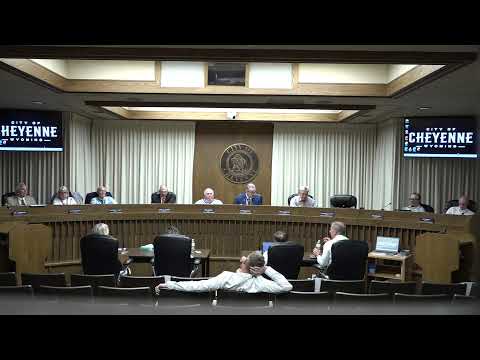
Cheyenne council rejects 12‑month moratorium on data centers after hours of public testimony
Summary
After nearly four hours of public testimony divided between labor, business and residents, Cheyenne City Council voted down a proposed 12‑month moratorium on new hyperscale data centers. Supporters asked for time for independent study on water, noise and health impacts; opponents warned of lost jobs and investment.
Cheyenne City Council on May 26 rejected a proposed 12‑month moratorium that would have temporarily blocked new data‑center construction, conversion or reuse in the city and adjacent areas.
Dozens of residents, union members, business leaders and industry representatives packed council chambers for a marathon public hearing. Supporters of a pause said the city lacks consolidated information needed to judge large, hyperscale projects’ cumulative effects on water supplies, the electrical grid, noise and public health. Opponents — including unions and contractors working on current campuses — said the pause would stall local jobs and investment and that safeguards and negotiated utility agreements protect ratepayers.
"A moratorium does not protect our community. It protects the status quo that sent our workers away in the first place," said Marcy Kindred, executive director of the Wyoming State AFL‑CIO, who urged the council to keep projects moving so local tradespeople would have steady work. Business owners and data‑center employees countered with their own testimony: "These projects changed that," said Cameron Worley, a tradesman working on local data centers, describing thousands of hours of local construction work and apprenticeships created by recent projects.
Council members debated whether a municipal moratorium could meaningfully require the technical studies petitioners requested. Several councilors noted that planning staff and utility partners already review power and water impacts during permitting and interconnection discussions. "We have to rely on state and utility processes for technical reviews," Councilmember Seed said.
In a voice vote the proposed ordinance failed to reach majority support; only one councilmember signified support by voice. After the vote, Mayor Collins said staff and the city would continue to take public input and require conditions through the usual planning and utility review processes.
Next steps: the city will continue to receive project proposals and permit applications; petitioners who urged a pause said they will pursue additional avenues to press for further study and disclosure of cumulative impacts.