Get Full Government Meeting Transcripts, Videos, & Alerts Forever!
Get email alerts on the Land Use Rezoning topic
No spam. Unsubscribe anytime.
Sheridan council approves rezoning of Flying Saucer RV Park for 362‑unit apartment project, 6–1
Summary
After hours of testimony and debate, Sheridan’s City Council voted 6–1 on Nov. 10 to rezone the Flying Saucer RV Park at 2500 W. Hampton Ave. to a Planned Unit Development allowing 362 apartments; the developer pledged voluntary relocation assistance but residents warned of displacement.
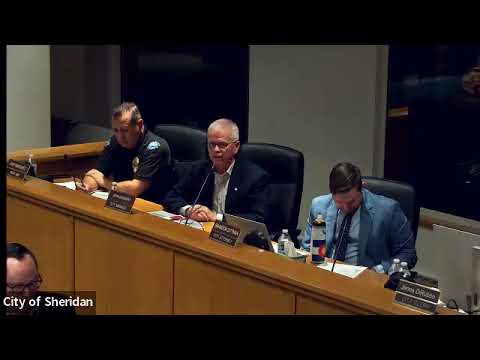
Sheridan City Council on Nov. 10 approved a rezoning that clears the way for a 362‑unit apartment development on the 16‑acre Flying Saucer RV Park property at 2500 West Hampton Avenue, voting 6–1 after a lengthy public hearing and staff presentation.
The council's approval implements a Planned Unit Development (PUB) with underlying mixed‑use commercial zoning the Garrett Companies proposed for the site, which the applicant says will include seven four‑story buildings, a leasing office, private amenities, and public improvements including an 8‑foot trail along Bear Creek, a pedestrian bridge at Bryant Street and intersection work at Riverpoint Parkway. Community Development Director Andrew Ragi recommended approval, citing the city’s comprehensive plan and a housing needs assessment that identified a strong shortfall of units in Sheridan.
Why it matters: the project would remove about 162 RV sites currently occupied at the Flying Saucer park and deliver 362 apartment units, a net increase of roughly 200 dwelling units in the city. Residents and local advocates warned that the closure would displace elderly, low‑income and disabled tenants and said available regional RV‑park capacity cannot absorb the residents. The developer and the property owner said the sale is voluntary and that they will contract a relocation consultant to assist tenants; council members said those commitments were important but voluntary and cannot be imposed as zoning conditions.
Staff analysis and developer commitments Andrew Ragi told council the property is partly in a floodplain, lies under overhead electric lines and is adjacent to the Riverpoint shopping area; current zoning allows a range of industrial and commercial uses that staff said are no longer compatible with the neighborhood. Ragi noted the city’s housing needs assessment identifying about 309 current units needed and 409 additional units through 2035, and recommended the PUD because it would align the site with the comprehensive plan and require public improvements that the city otherwise lacks funds to build.
Heath Kennedy, senior development manager for the Garrett Companies, and members of the Flying Saucer family described the sale as the family’s decision after more than 75 years of ownership. Kennedy said the developer intends to dedicate nearly two acres along Bear Creek to the city, build trail and bridge connections, and proceed to site plan and platting if zoning is approved. The applicant told council it aims to provide many units targeted below 90% area median income, and to hire a local housing relocation consultant to develop individualized relocation plans for tenants prior to closing (the developer indicated a potential closing in the spring/summer of 2026).
Public comments and concerns More than a dozen people spoke during public comment. Longtime tenant Tina Olfest told council the proposal “will not help our families and current residents who are struggling with affordability,” argued the regional RV parks cannot absorb Flying Saucer residents and urged direct financial relocation assistance rather than a consultant. Don Shepard, a housing authority director who spoke in support of tenants, asked the council to “show the people that you understand and really care.” Ann Whipple, representing the owning family, recounted five generations of family operation and said the family decided to sell: “For the last 76 years, the Ratliff family has been providing affordable below market rent to tenants in the city of Sheridan.”
Council decision and next steps After deliberation — during which several council members acknowledged the displacement risk but noted private property rights and the city’s comprehensive‑plan goals for the site — the rezoning ordinance passed on a 6–1 roll call. Council also approved a separate development agreement with the applicant to formalize public‑improvement responsibilities.
What’s next: the developer must file a site development plan and final plat and secure permits and required environmental and traffic mitigations (applicant agreed to voluntary cleanup program enrollment and vapor mitigation because the site is near a former landfill). The city and developer said they will work to implement relocation assistance for tenants, but officials emphasized the assistance is voluntary and its scope and budget remain to be finalized.
The City Council’s vote followed a 4–1 recommendation for approval by the Planning Commission and staff’s recommendation to approve the rezoning with a development agreement. Mayor Tara Berflur presided; the ordinance carried 6–1. The record shows continuing community concern about displacement and affordability as the project moves into permitting and implementation.