Get Full Government Meeting Transcripts, Videos, & Alerts Forever!
Get email alerts on the Wheel Tax topic
No spam. Unsubscribe anytime.
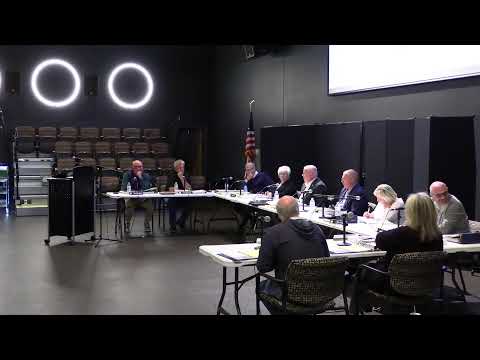
Council hears LTAP briefing on wheel tax, direct‑distribution funding that could add six‑figure road revenue
Summary
Purdue LTAP representative Pat Connor told Bedford Common Council that adopting a municipal wheel tax and excise surtax would make the city eligible for lane‑mile direct distributions; Pat presented preliminary revenue ranges and explained statutory requirements and timelines for adoption.
Pat Connor, an asset‑management engineer with Purdue University’s Local Technical Assistance Program, told the Bedford Common Council on April 21 that adopting a municipal wheel tax and matching excise surtax could produce direct, no‑application lane‑mile funding for the city and increase local street department revenue.
Connor said the state recently tied the lane‑mile direct distribution to municipal adoption in House Bill 1461 and that "To get that lane mile direct distribution, you must have the wheel tax and excise sir tax." He outlined two linked fees: an excise‑type surtax for passenger vehicles (minimum $7.50 up to $25) and a wheel‑type fee for heavier vehicles (minimum $5 up to $40), and stressed they must be adopted concurrently. Connor described exemptions (state and political‑subdivision vehicles, school buses, certain church and funeral vehicles) and implementation steps with the Bureau of Motor Vehicles.
Connor presented preliminary revenue scenarios the LTAP team calculated. Using a municipal rate that mirrors Lawrence County’s $25 level, the city’s annual receipts were estimated in his slides at about $332,000; he said the lane‑mile direct distribution for Bedford could range roughly from $95,000 to $150,000 depending on statewide adoption and pot size. Connor also cautioned the figures are estimates and said he did not verify them with the city controller’s office.
Council members asked about double taxation for residents and timing. Connor said recent statutory changes remove stacked charges so residents would not pay the county and city fees twice if local rates match the county’s. He also noted the typical statutory deadline to adopt an ordinance is Sept. 1 to affect registrations the next calendar year, and that a one‑time earlier deadline applied for an immediate distribution this cycle. "We are here as an education and training resource," Connor said, adding he aims to supply the information councils need to decide whether to proceed.
No ordinance was introduced or voted on at the meeting. Council members asked staff to follow up on technical details, coordinate with the BMV on ordinance language, and verify revenue estimates before a formal adoption decision.