Get Full Government Meeting Transcripts, Videos, & Alerts Forever!
Get email alerts on the Stormwater Ordinance topic
No spam. Unsubscribe anytime.
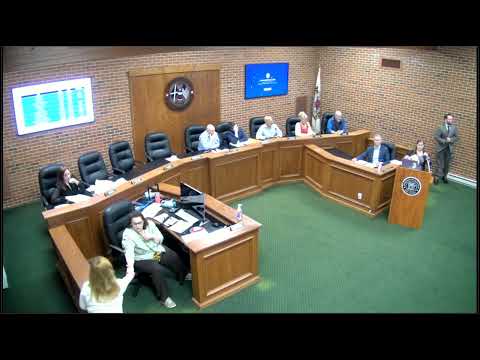
Council introduces repeal of stormwater ordinance after planning board flagged wording on sump-pump discharges
Summary
Council introduced Ordinance 25-08 to repeal and amend the borough's stormwater regulations after planning-and-zoning concerns that the prior language misapplied exceptions for sump-pump discharge and left ambiguity about historic-property definitions; council agreed to refine language with the planning-board attorney.
The Matawan Borough Council introduced Ordinance 25-08 on April 15, a measure to repeal and replace prior stormwater-control language after the planning-and-zoning board raised concerns about how exceptions and definitions were written.
Council members discussed that the earlier draft appeared to permit sump-pump discharge exceptions only for new commercial properties rather than broadly where property topography made private discharge appropriate. The planning-and-zoning board also sought a clearer definition of "historical property" to avoid unintended application. Council members said the ordinance had not been referred to planning and zoning at the expected step earlier in the process, and they acknowledged an oversight; the sponsor said the borough attorney and planning-and-zoning counsel are reviewing revised language.
Council agreed to introduce the repeal/amendment measure and referred revisions back for review so that exceptions for private discharge and the historical‑property definition are explicitly spelled out and applied consistently. On procedural votes the introduction moved forward with council support; a public hearing was scheduled for May 6 at 7 p.m.
Why it matters: changes to local stormwater control rules affect property owners' obligations, public drainage systems and the applicability of local regulations tied to the borough master plan. Ambiguity in exemptions and definitions can produce inconsistent enforcement and unintended costs for property owners.
Council members said they will coordinate with planning-and-zoning counsel to refine the ordinance text and bring a clearer version back for public hearing and adoption.