Get Full Government Meeting Transcripts, Videos, & Alerts Forever!
Get email alerts on the Greenberg Farm Redevelopment topic
No spam. Unsubscribe anytime.
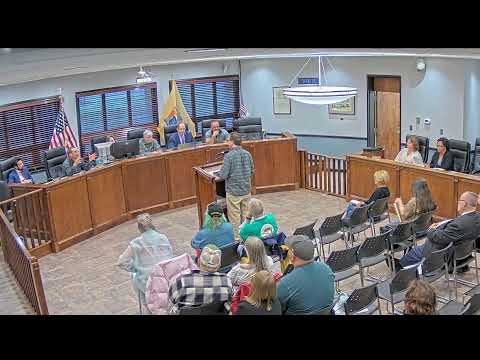
Pemberton Council advances Greenberg Farm paperwork, sets abatement ordinance for second reading amid resident objections
Summary
The Pemberton Township Council approved documents tied to the Greenberg Farm redevelopment and voted to schedule a second reading of an ordinance authorizing a five‑year tax abatement for purchasers. Residents repeatedly warned about infrastructure costs, spot‑zoning concerns and the loss of farmland; lawyers said the township is contractually bound and must meet fair‑share housing obligations.
The Pemberton Township Council on May 1 authorized documents linking the Greenberg Farm redevelopment to the township’s fair‑share housing plan and scheduled a second reading of an ordinance that would implement a five‑year tax abatement for qualifying home purchasers.
Dozens of residents urged the council to delay or reject the measures, arguing that the township — not the developer — stood to shoulder much of the infrastructure cost for water, sewer and public safety. "Why are we indebted to pay $2 million to extend the water line?" resident Joe Fallon asked during public comment, saying taxpayers should not underwrite improvements that benefit a private redeveloper.
Council members and township attorneys responded that the redeveloper agreement, executed in November 2021, conditions the project on a tax‑abatement arrangement and that the township’s fair‑share housing obligations factor into the decision. Evan Campbell, who identified himself as conflict counsel for the township, told the council the resolution before it would record a declaration that 40 of the units will be designated as affordable housing and would authorize a notice of intention under the Fair Share Housing Act. He said the developer will pay for the traffic signal and other site improvements the county requires.
The council approved Resolution 131‑2026, which authorizes three documents related to the Greenberg Farm: (1) a notice of intention to develop under New Jersey’s affordable‑housing framework; (2) a declaration of covenants to record that 40 units will be affordable; and (3) a shared‑services agreement for a traffic signal near the Wawa on Fort Dix Road. The roll call vote was recorded as Mr. DeCarleroy Yes, Mr. Doyle Yes, Mr. Dewey No and Mr. Harper Yes, carrying the resolution 3–1.
After the vote, the council introduced Ordinance 14‑2026, described by counsel as a five‑year exemption and abatement agreement applicable to incremental construction value rather than the land itself. Counsel said the ordinance uses an abatement schedule of 20%, 40%, 60%, 80%, 80% across five years (in which the purchaser pays a growing share of the incremental tax each year) and includes two safeguards: a prohibition on combining the abatement with other state senior tax relief programs, and a cap confirming abatement cannot exceed the statutory limit (described in the discussion as 30% of construction cost in certain statutory contexts).
Residents at the meeting repeatedly questioned both the fairness and the legality of prior actions that set the project in motion. Pat Gaffney argued the redevelopment designation amounted to "spot zoning" and urged the council to form an internal review committee and perform a municipal cost‑of‑service analysis before approving any abatement. Michelle Forman and others asked why developer representatives were not present to answer questions and why the township did not wait for barns and silos on the property to be demolished before advancing approvals; council members said permits have been filed for demolition and that the developer has agreed to remove the structures but that the township cannot legally force timing beyond what the contract requires.
Council and legal staff also clarified several procedural and fiscal points that residents raised. The township confirmed it received three years of farmland rollback taxes when the property’s assessment changed, which adds revenue to municipal coffers. Counsel said the five‑year abatement does not inure directly to the redeveloper; rather, abatement benefits would be applied to qualifying end users when each unit is sold and requires an application to the township. Counsel said that if a unit is sold within the abatement period, the abatement does not carry forward to a subsequent purchaser. On legal exposure, counsel warned the council that declining to perform on a redevelopment agreement could trigger enforcement actions from the redeveloper and would risk broader builder’s‑remedy claims if the township failed to meet its court‑approved affordable‑housing commitments.
Several speakers asked whether the original redevelopment documents visible on the planning‑board website included the abatement; counsel and staff said an amended redevelopment agreement dated November 12, 2021, includes the abatement language and that the township will provide the agreement and the resolution that approved it for public review.
The council voted to put the ordinance on the May 6 agenda for second reading and potential further action. The roll call on scheduling the second reading recorded Mr. Doyle Yes, Mr. DeCarleroy Yes, Mr. Dewey No and Mr. Harper Yes.
What happens next
Ordinance 14‑2026 was introduced and will return for a second reading and public comment on May 6. The resolution approving the recordation of affordable‑housing covenants and the shared‑services agreement is effective as approved. Residents at the meeting said they plan further outreach and suggested legal review of past decisions; council members said they will continue to press for contractual protections and to minimize taxpayer exposure where possible.