Get Full Government Meeting Transcripts, Videos, & Alerts Forever!
Get email alerts on the Comprehensive Plan topic
No spam. Unsubscribe anytime.
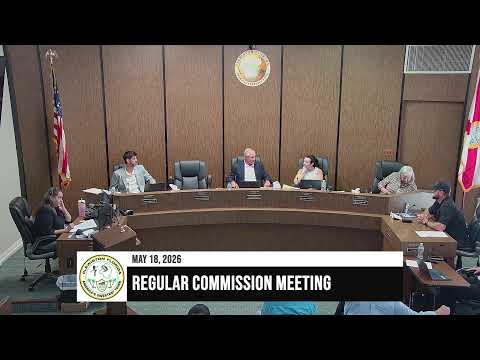
Clewiston adopts first reading of sweeping 2026 comprehensive-plan update, sets path for state review
Summary
Consultants and the commission advanced a major rewrite of Clewiston’s comprehensive plan on first reading, reorganizing documents, adding an employment-hub designation and leaving population projections unchanged pending development of 438 acres of recently annexed U.S. Sugar property.
Clewiston commissioners approved on first reading an ordinance that reorganizes and updates the city’s comprehensive plan, moving the goals, objectives and policies into a stand-alone document and placing supporting technical material in a separate support-data volume.
City planning consultant James Borsos told the commission the changes reflect statutory requirements and aim to make the plan easier to use. “The current comprehensive plan…has not been comprehensively updated since 2015,” Borsos said, and the proposed format splits the policy document from support material to simplify future amendments.
The amendments include three notable changes: an updated 10-year water-supply plan; a new private-property-rights element; and an employment-hub future-land-use category assigned to roughly 438 acres of recently annexed U.S. Sugar property west of town. Borsos said the commission is using state-prepared population projections in the document: “The current population estimate of the city is 7,314 residents…projected to increase to 7,418 residents by 2045,” a projection he said deliberately excludes the U.S. Sugar parcels because those projects have not yet begun permitting.
Consultant Jim Fleshman walked commissioners through the statutory review steps that follow first reading: state agency review, a 30-day comment period, a city response window and a second-reading adoption process. Staff recommended submitting the adopted first-reading ordinance and the support document to state reviewers within 10 days, as required by Florida law.
Commissioners discussed refinements that the commission and staff can make between first and second reading, including more specific direction for the Community Redevelopment Area (CRA) and possible policies to support existing local businesses as well as new eco‑tourism uses. Commissioners also asked staff to ensure future infrastructure and water-supply planning account for three large planned-unit developments to the west of the city.
The ordinance (Ordinance 2026-03) passed on a voice vote. Under the expedited state review process described by consultants, agencies will have 30 days to comment; the city then has up to 180 days to complete second reading and respond to objections before final state action.