Get Full Government Meeting Transcripts, Videos, & Alerts Forever!
Get email alerts on the Municipal Budget topic
No spam. Unsubscribe anytime.
First Selectman Dan unveils East Lyme 2026–27 budget, proposes new firefighters, police hires and a 2.5‑mill increase
Summary
First Selectman Dan presented a roughly $105 million draft budget on Feb. 10, 2026, proposing to expand the fire force to 18 firefighters, add 1.5 police officers and raise the mill rate about 2.5 mills to 30.67; the board scheduled department hearings ahead of the March 11 board of finance deadline.
First Selectman Dan presented East Lyme’s draft 2026–27 budget at a special meeting on Feb. 10, 2026, saying the plan would expand public‑safety staffing, increase investments in IT and cybersecurity, and aim to shift more purchases to cash capital to reduce future borrowing.
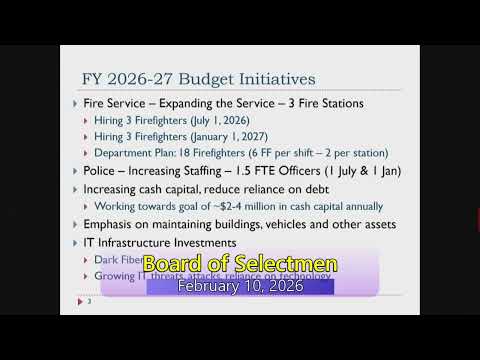
The budget proposal covers about $105 million in total spending and includes hiring three firefighters on July 1, 2026, and three more on Jan. 1, 2027, moving the department toward 18 firefighters (six per shift). Dan also proposed adding "one and a half" police officers — one starting in July and a half‑year position starting Jan. 1, 2027 — as part of public‑safety expansions.
Finance Director Kevin Jet, who presented the detailed numbers, told the Board of Selectmen that general‑government spending is up largely because of a 15% increase in health‑insurance costs and rising retirement costs. "Before we add the six firefighters and two police officers, that health‑insurance increase alone is nearly a million dollars," Kevin said, noting employee benefits are a major driver of the increase.
Kevin said the town is again trying to grow annual cash capital to reduce borrowing, describing a multi‑year goal to reach roughly $2 million in cash capital. He reported $7 million in requested capital projects this year, of which about $1 million would come from cash and the remaining $6 million would be financed by bonds, a mix he warned risks increasing long‑term debt service.
On the revenue side, Kevin said many categories are flat or slightly down and that the town plans for higher tax receipts partially offset by growth in the grand list. He reported the grand list rose about $32 million (roughly 1.13%), which helps limit the mill‑rate impact. Still, the draft would raise the mill rate about 2.5 mills to 30.67; Dan gave an example that a home assessed at $350,000 (market value $500,000 in his example) would see taxes rise by about $78 per month under the proposal.
Kevin and board members discussed additional budget pressures: rising IT costs (he said IT spending can rise 5%–15% or more), pension costs (he said the pension remains funded at "over 92%") and a negotiated change with the town’s largest union that moves new hires after July 1, 2025, into a defined‑contribution plan rather than the defined‑benefit pension.
The Capital Improvement Committee cut project requests from about $11 million to roughly $6.9–7 million in its recommended package, Kevin said, noting most committee votes on recommended cuts were unanimous or near‑unanimous. Kevin also said the full budget book and supporting documents (about 60 files) are posted on the town website for public review.
The board scheduled a series of department‑head review sessions to vet the budget before sending it to the Board of Finance: Feb. 17, Feb. 18, Feb. 23, Feb. 26 and March 4 at 5:30 p.m., with the Board of Finance meeting on March 11 serving as the target for submission. Dan said the schedule will allow department presentations and CIP chair Joe Bgo to deliver the CIP committee’s recommended package to the board.
No final vote on the budget occurred at the special meeting; the board thanked the CIP committee and staff and adjourned after the presentation. The next procedural steps are the department hearings and the board’s formal submission to the Board of Finance by the March deadline.