Get Full Government Meeting Transcripts, Videos, & Alerts Forever!
Get email alerts on the Land Use Virginia Village topic
No spam. Unsubscribe anytime.
Falls Church council opens zoning review for Virginia Village after weeks of public comment
Summary
After weeks of written and in-person public comment, Falls Church City Council adopted an initiating resolution to begin zoning text amendments for the Virginia Village area and outlined a revised RFP and land‑use schedule that preserves a public comment window before final zoning decisions in October.
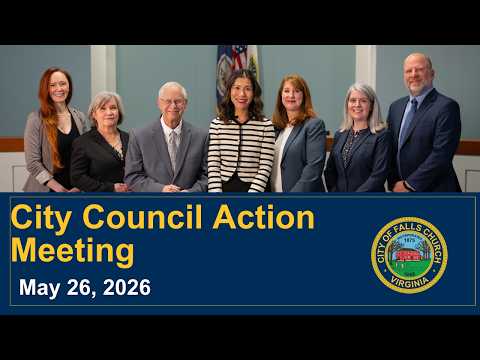
Falls Church City Council on May 26 adopted an initiating resolution to begin revising zoning tools that would govern redevelopment in the Virginia Village area, after a prolonged public-comment period in which residents urged protections for adjacent neighborhoods and parkland.
The resolution, TR26-17, passed unanimously after councilmembers agreed to a minor wording change to say the action would “help meet” the city’s housing goals rather than “fulfill” them. Senior planner Jack Trainer told the council the zoning effort will translate guidance from recently updated small-area plans into precise controls on building scale, setbacks, stepbacks, parking, density ratios and allowed uses.
Why it matters: Virginia Village is publicly owned land in a 2.2-square-mile city where affordable housing advocates and neighborhood residents both view the site as pivotal. Staff presented a roadmap that aligns the RFP procurement and a separate land-use/zoning process so the two can inform each other; final zoning changes are not expected to be adopted until a possible second reading/public hearing in late October so proposals and community feedback can shape the rules.
What council and staff said: City Manager Wyatt Shields laid out the schedule: work sessions on June 1 and June 15, first readings and authorization to issue the RFP on June 22, proposals due July 31, evaluation in August and a council briefing on Sept. 8; the city would aim for a public hearing and second reading on the zoning text amendment Oct. 26. Shields said staff proposes delaying RFP issuance about a month to allow more outreach and to give the council time to react to proposals before zoning is finalized.
Community concerns and support: Dozens of written comments and in-person speakers focused on two central themes: expand and preserve affordable housing; and protect Winter Hill and Big Chimneys Park from excessive height, reduced setbacks and shadowing. Neighbors repeatedly asked the council to preserve a 40-foot setback adjacent to Winter Hill, require mandatory shadow and visual-impact studies before finalizing heights, step down to two-to-three story edges next to single-family homes, and maintain meaningful open space and parking buffers.
“I think the current timeline is being driven by a March 2027 tax credit application deadline. That’s the developers’ timeline, not the community’s,” said Mark Resta, a resident who asked for more time to review a draft ordinance. Several speakers said the draft RFP revealed potential zoning changes to setback rules only after public meetings, prompting concerns about transparency.
Supporters of redevelopment urged urgency to address an expanding shortfall in committed affordable units. “Opportunities like Virginia Village are incredibly rare,” resident Robin Rainey said, noting that more than 100 currently committed affordable units may expire in coming years while hundreds of families wait for city housing programs.
Process safeguards and next steps: Council members and staff agreed the evaluation committee for the RFP would include representatives from city boards and commissions and that the council remains the ultimate decisionmaker. Staff intends to publish a schedule showing explicit public-comment opportunities (including a targeted Winter Hill meeting) and to bring consultants (Jones Lang LaSalle) and technical advisers into work sessions so council and community can better understand financing implications, including LIHTC timing.
The initiating resolution does not change zoning today; it directs staff to begin the formal amendment process, which will include planning commission review and multiple opportunities for the public to comment before any ordinance is adopted. Council members emphasized they expect to preserve the city’s affordable-housing goals while working to protect neighborhood character.
What’s next: The council approved TR26-17 as amended and will see a series of staff briefings and public-work sessions in June and July. Issuance of the RFP is likely to be authorized after June 22; proposal evaluations are scheduled for August, with a council briefing in September and potential zoning adoption in October.
Ending: Council members reiterated that the process is intended to be iterative: staff will return with draft zoning tools informed by public input and market responses, and any final changes to the ordinance will be subject to public hearing and council vote.