Get Full Government Meeting Transcripts, Videos, & Alerts Forever!
Get email alerts on the Candidate Selection topic
No spam. Unsubscribe anytime.
Prior Lake‑Savage board selects candidates for superintendent interviews, sets June 1–2 schedule
Summary
The Prior Lake‑Savage Area Schools board voted to invite five candidates to interview and—after outreach—scheduled interviews for June 1 with deliberations June 2; the board decided not to livestream interviews and to record and post deliberations. The board also selected 11 interview questions drawn from its leadership profile.
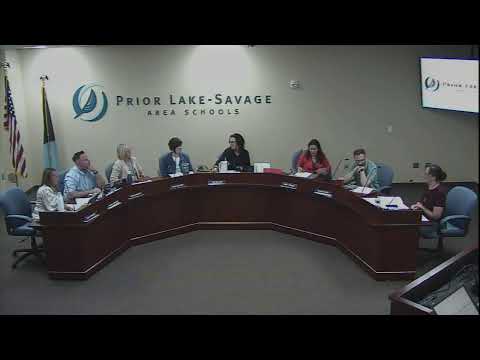
The Prior Lake‑Savage Area Schools Board of Education advanced five applicants to the public interview stage of its expedited superintendent search and set interviews for June 1 with deliberations scheduled for 6 p.m. on June 2.
Using internal candidate labels during closed review, the board entertained motions and conducted roll‑call votes to extend interview invitations to candidates identified in the meeting as Candidate C, Candidate A, Candidate H, Candidate D and Candidate F. After outreach by MSBA consultant Barb Dorne, the meeting record shows that some invitees accepted and at least one declined; Dorne reported “Four of the candidates have accepted your invitation to interview,” and later read a list of named interviewees.
Dorne announced the invited interviewees by name during the meeting: Dr. Jeff Flag; Dr. Jeremy Schmidt; Dr. Nick Aly; Dr. Nicholas Kramer; and Dr. Jim Wagner. The board discussed logistics and agreed not to livestream interviews in order to avoid giving later candidates an advantage; members leaned toward recording deliberations and posting them, and ultimately moved to record deliberations with planned posting of the selected candidate’s interview recording.
Board members also finalized a compact list of interview questions derived from the district’s leadership profile. After a question‑by‑question tally the board combined and refined items, arriving at eleven questions to be asked of each candidate (the packet and the exact wording will be provided to candidates before interviews). Dorne explained the Exceeds/Meets/Disappoints (EMD) scoring, and the board agreed to use hard‑copy EMD forms during the early interviews and to turn scoring materials over to HR after the process.
Formal actions recorded in the meeting minutes include motions to extend interview offers for the five internally‑labeled candidates (Candidate C, A, H, D, F); all five motions received board approval on majority votes in roll‑call ballots recorded on the transcript. One later invitee declined; Dorne said four accepted and the team adjusted the interview schedule accordingly. The board set the interviews for Monday, June 1 (multiple one‑hour slots beginning in late afternoon) and continued the meeting to deliberate at 6 p.m. Tuesday, June 2.
Why it matters: The board’s decisions convert private applicant data into public finalist status for the invited candidates, set the timetable for interviews and contract negotiations, and determine how much of the process will be recorded and made visible to the public.