Get Full Government Meeting Transcripts, Videos, & Alerts Forever!
Get email alerts on the Education Funding topic
No spam. Unsubscribe anytime.
Parents and students urge Grand Forks board to protect elementary music amid budget cuts
Summary
At public comment the board heard pleas from a student, a music educator and a resident who also urged opposition to multi‑year TIF pilots that they said strain district revenues. Dr. Whitney Mayo quantified elementary music costs at about $3,000 per campus and framed cuts as an equity issue.
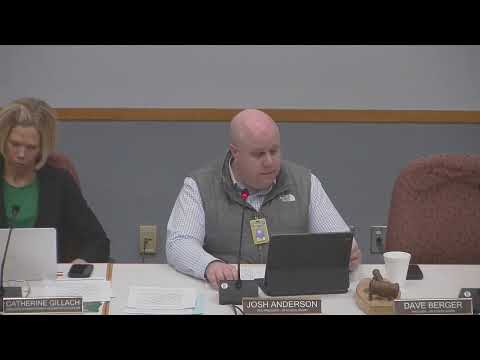
Three public commenters addressed the Grand Forks School Board during the March 23 meeting, urging protection of elementary music and criticizing long-term tax-incentive pilots as harmful to the district's finances.
Andrew Kraulik, a Grand Forks resident and business owner, urged the board to align its engagement process for TIF/PILOT reviews with the approach the county commission and city adopted Jan. 20 and to oppose five‑year pilot exemptions he described as an "abuse" that reduces property-tax revenue. Kraulik said two projects under discussion (The Domain and CK Commercial) represent roughly $2.5 million in exemptions and asked board members to be vocal in city meetings on behalf of students and taxpayers.
A first‑grade student, Vivian Mayo, addressed the board directly: "These cuts to elementary music are not fair," she said, describing anticipation for second‑grade music performance she fears will be lost.
Dr. Whitney Mayo, an assistant professor of music education at the University of North Dakota and a parent, expanded the case. She said recent administrative decisions threaten CODA-funded elementary general-music and chorus programming and framed the matter as one of labor, equity and accountability. She told the board the district's elementary music programs cost about $3,000 per campus per year, approximately $33,000 across 11 elementary schools, and asked the board to hold to standards it itself applies to compensating board members. "This is a question of priorities," Dr. Mayo said, arguing that proposed non‑monetary workarounds would unfairly shift responsibilities onto teachers without fair pay.
Board members did not engage in debate during the public-comment portion but noted the testimony and directed public comments and concerns to be routed to the superintendent for follow-up under board policy.