Get Full Government Meeting Transcripts, Videos, & Alerts Forever!
Get email alerts on the Policy Training topic
No spam. Unsubscribe anytime.
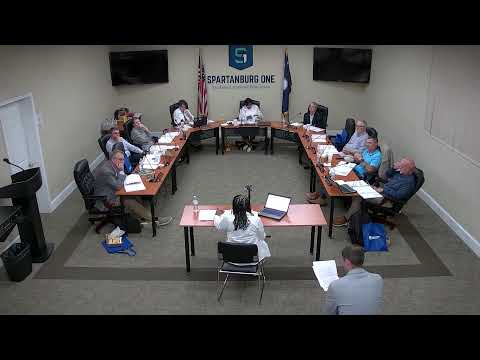
SCSBA policy director tells Spartanburg District 1 board: "Policy is the voice of the board"
Summary
Rashidita Cleveland of the South Carolina School Boards Association told Spartanburg County School District 1 trustees that written policies turn the board's vision into enforceable actions, reduce legal risk, and should be reviewed regularly; she urged a coordinated review schedule and described SCSBA services.
Rashidita Cleveland, director of policy and legal services for the South Carolina School Boards Association, told the Spartanburg County School District 1 board at a work session that "policy [is] the voice of the board and the law of the school district," and described policies as the board's primary governance tool.
Cleveland opened her presentation by defining policy and explaining its practical purpose: written policies translate vision into goals, set clear expectations for staff and students, and reduce the district's exposure to litigation. "When litigation arises, the first place that courts will go is your policy," she said, noting courts use policies to reconstruct how a situation developed.
Cleveland walked trustees through a distinction the board should preserve: policies set the what and why, while administrative procedures describe how the superintendent and staff implement those policies. She told the board the superintendent needs sufficient discretion to manage day-to-day operations but emphasized that the board should adopt written policies that are "broad enough" to allow implementation and "specific enough" to guide administrators.
On review practices, Cleveland recommended a formal schedule and regular review to keep policies up to date with state and federal requirements. She described SCSBA's role in the process: providing model policies, limited legal review, and an online policy manual. "Our model policies are legally compliant, customizable templates," she said, and offered to review any proposed language before the district posts it online.
Trustees asked several clarifying questions during Cleveland's presentation, including when policies should be suspended or repealed. Cleveland said suspension should be limited to emergencies where statutory deadlines require expedited adoption, and cautioned that frequent suspension signals a need to revisit a policy's substance. She closed with practical advice: post policies for public review after the first reading and keep a consolidated review schedule so related policies are handled together.
The board did not take formal votes during the training; Cleveland's materials and SCSBA follow-up were described as available support for the district's ongoing policy revision work. The next procedural step is that staff will circulate draft policy language and board members were asked to return edits by the stated packet deadline to allow substantive first-reading discussion.