Get Full Government Meeting Transcripts, Videos, & Alerts Forever!
Get email alerts on the Police Accountability topic
No spam. Unsubscribe anytime.
Salem review board unanimously rejects Professional Standards' closure of fatal-crash case
Summary
The Salem Community Police Review Board on April 14 voted unanimously that it does not concur with the Professional Standards Unit's decision to administratively close Internal Affairs Case 250092. The board said it lacked sufficient information, will send a written letter to the complainant and recommended review of body-worn camera release procedures.
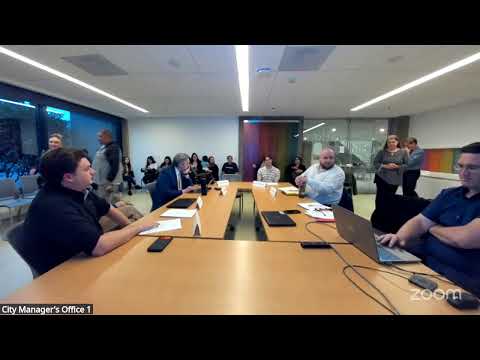
The Salem Community Police Review Board voted unanimously April 14 that it does not concur with the Professional Standards Unit's decision to administratively close Internal Affairs Case 250092, a review of the police investigation into a fatal crash that killed David Luna.
At a public hearing, the complainant's side said the investigative file left multiple unanswered questions. Mary Gardner, identifying herself as David Luna's mother and reading material provided by the complainant, described witness statements and a 911 call she said reported a Mercedes driving "erratically" before the crash. Gardner read documents saying the Mercedes driver initially told officers he was "going approximately 70 to 75 mph" and later contradicted that account; she said the other driver had admitted to recent drug use and that no drug test had been conducted on him. "They closed the case the same night," Gardner said, adding that the family was denied access to body-worn camera footage and that nearby businesses' surveillance footage was not collected within the seven-day window it is typically retained.
Lieutenant Steve Calvin, the Professional Standards reviewer who spoke at the hearing, said the internal review found the investigation followed policy and that the case file had been submitted to the district attorney's office, which declined to file charges. "The entire case was sent to the DA's office for review and no charges were filed," Calvin told the board, adding that the medical examiner's office typically handles post-death toxicology and that there are specific criteria for release of body-worn camera footage. He described how investigators weigh independent witness statements, noted that some traffic cameras at the intersection were not recording at the time, and said Officer Bennett prepared a summary report and the file included photos, scans and a reconstruction summary.
Board members pressed Calvin and the investigative team about several points the family raised: why an alleged admission of drug use did not lead to a drug test on the other driver, who requested and viewed medical and hospital records, whether officers actually obtained exterior surveillance footage from nearby businesses, and why body-worn camera access had been denied to the family. Calvin said the police worked in concert with the DA on fatal-crash cases, and that probable-cause thresholds and timing of requests (and medical examiner involvement) factor into what investigative steps are possible.
After deliberating in executive session, the board reconvened and asked members to indicate whether they concurred with the Professional Standards Unit's finding that the matter be closed as an "assist in contact." The board recorded no votes in favor of concurrence and the chair said, "let the record reflect the board unanimously does not concur." The board said its finding is advisory and nonbinding; it will provide a written letter to the complainant explaining its reasons and recommending actions it wants the City Manager and department to consider, including a review of policies governing release of body-worn camera footage.
The board cited an insufficient evidentiary record as a principal reason for its decision. In public remarks the chair reiterated the board's role as an advisory body to the City Manager and noted that the board is required to produce an initial report within 30 days of the hearing describing its findings and recommendations.
What happens next
The board will issue a written letter with its findings and recommendations to the complainant, the Police Department and the City Manager. The Professional Standards Unit and the DA's office retain responsibility for charging decisions; the board's recommendation is advisory. The board said it would ask the department for clarity about why specific evidence was not collectable or released and for a formal response on body-worn camera release decisions.
Note on the record
The hearing transcript contains multiple timeline and documentation items raised by witnesses and the reviewer, including a cited investigative report dated May 16, the original incident date and an administrative closure date referenced in the file; where the transcript presented conflicting or partial dates or details, the article reports those claims as presented at the hearing rather than resolving them independently.