Get Full Government Meeting Transcripts, Videos, & Alerts Forever!
Get email alerts on the Budget topic
No spam. Unsubscribe anytime.
Clark County board adopts tentative 2026–27 budget, approves additional pay bump for classified staff
Summary
The Clark County Board of Education approved a tentative 2026–27 budget and voted to add a 2% increase for classified hourly staff, while staff warned of an estimated recurring shortfall and rising costs for fuel and insurance that the district plans to manage through revenue options and contingency.
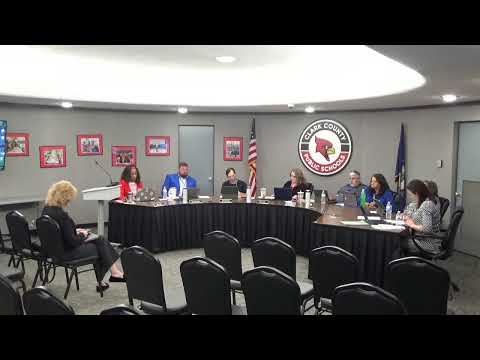
The Clark County Board of Education voted unanimously to adopt a tentative 2026–27 budget and approved the district's pay schedules with an additional 2% increase for classified hourly employees.
Alicia Ellis, the district finance officer, told the board the tentative budget must be submitted to the state by the 30th and reflected current revenue assumptions, bond timing and several cost pressures. "This is what we have to submit to the state by the 30th and what we will start our school year with," Ellis said during her presentation.
Ellis reviewed the district's major funds and revenue mix, saying the general fund is the largest bucket and that local property taxes combined with SEEK (state) dollars make up the bulk of revenues. She described how state equalization reduces SEEK dollars for districts as property values rise, and noted transportation funding in the SEEK formula is currently funded at about 81% of recognized cost. "We're not 100% funded on transportation," she said; "transportation was 81%."
Faced with inflationary pressures, Ellis highlighted rising line items including fuel and insurance. She told the board that insurance premiums on non-workers-comp coverage rose about 25%, adding roughly $275,000 to next year's budget, and that fuel costs have been volatile enough to require the district to increase its fuel allocation from about $400,000 to $600,000. She also said initial costs for a new High Quality Instructional Resource implementation could require using general fund dollars in year one (roughly $700,000), with grant and Title funds expected to cover parts of the multi-year expense.
On the revenue side, staff showed a set of options and said a 4% revenue option could bring the district about $1 million. Ellis explained the difference between beginning fund balance and contingency and said the district's beginning fund balance is estimated near $8.6'$8.8 million, while contingency is closer to 6% of budget. After accounting for one-time rollovers and purchase orders, staff presented a recurring shortfall estimate of roughly $871,000 under the compensating rate.
Board members spent time weighing trade-offs between preserving contingency and using a revenue option to cover raises and inflation. "If we take the 4% revenue increase, this will be covered with that," one board member said during the discussion.
As part of the budget agenda, the board approved a motion to adopt the compensating-rate tentative budget as presented and later approved the district's pay schedules and extra services with a separate motion adding a 2% increase for classified hourly staff. The board recorded both votes as 5'0to'00.
Other related routine approvals that passed included the school activity fund budgets and a travel request for a student team; each item was approved unanimously.
The tentative budget will be revisited at the working-budget stage in September, when final state reports, bond sale numbers and actual grant awards will be available. Staff said they will present further detail on implementation of instructional resources and on the final compensation tables at a future meeting.
The board adjourned to executive session after the public business portion of the meeting.