Get Full Government Meeting Transcripts, Videos, & Alerts Forever!
Get email alerts on the Property Use Church topic
No spam. Unsubscribe anytime.
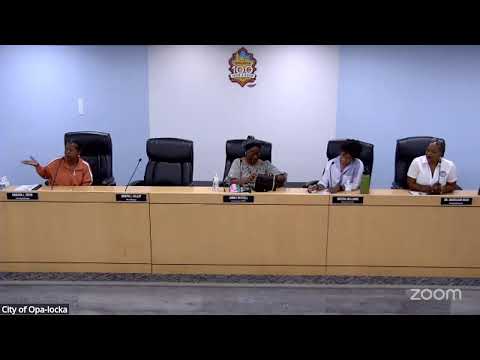
Opa-locka CRA debates interim uses for church building; staff to return with rental criteria
Summary
After discussing its long-term demolition plans, the CRA directed staff to develop rental guidelines for a CRA-owned church building and to return with recommendations; board members expressed mixed views on interim rentals, staff capacity, insurance, and community access.
The Opa-locka Community Redevelopment Agency spent more than an hour debating whether to allow interim rentals of a CRA-owned church building while it moves toward long-term redevelopment.
The director told the board his office purchased several properties to clear and market for developers and that the church was intended to be temporary holding property while longer-term plans proceed. Staff said they had prepared a rental application and asked the board whether the CRA should permit short-term or recurring rentals in the interim. The director noted the building currently houses a daycare under lease for roughly one year and collects $3,500 monthly in rent.
Board members expressed a range of positions. Several members opposed turning the CRA into a rental manager and raised operational concerns — insurance verification, staffing to open and close the facility, maintenance and utility costs, and the risk that short-term tenants might overstay. Other members said the space could serve more residents if guard rails were applied: favoring recurring, intermediate-term uses (for example, a recurring Sunday service or weekly community programs) rather than one-off events such as single-day rentals or parties. Multiple members recommended either requiring recurring bookings, setting minimum-term or maximum-instance limits, or contracting a third-party manager to handle the logistics.
Staff also updated the board on a related historic building matter: the CRA previously approved a $100,000 grant related to a historic bank building; about $30,000 was used to remove large quantities of bottles and debris, leaving roughly $70,000 in the grant line. Staff said an architect estimated full rehabilitation could cost $1.5–$2 million and recommended seeking additional preservation funding and obtaining a second contractor opinion before any CRA commitment.
The board did not vote to allow general rentals that evening. Instead, members directed staff to hold an internal meeting, refine the rental application and guard rails, and return with a specific recommendation for interim use and pricing. The director said staff would reach out to the interested church and other potential users under that guidance.
What happens next: staff will produce rental criteria and a recommended operating approach (including insurance and staffing options), provide cost estimates and sample pricing, and return to the board for a future decision.